



Forex as a Lifestyle: How Trading Changes Worldview and Helps Understand Global Processes
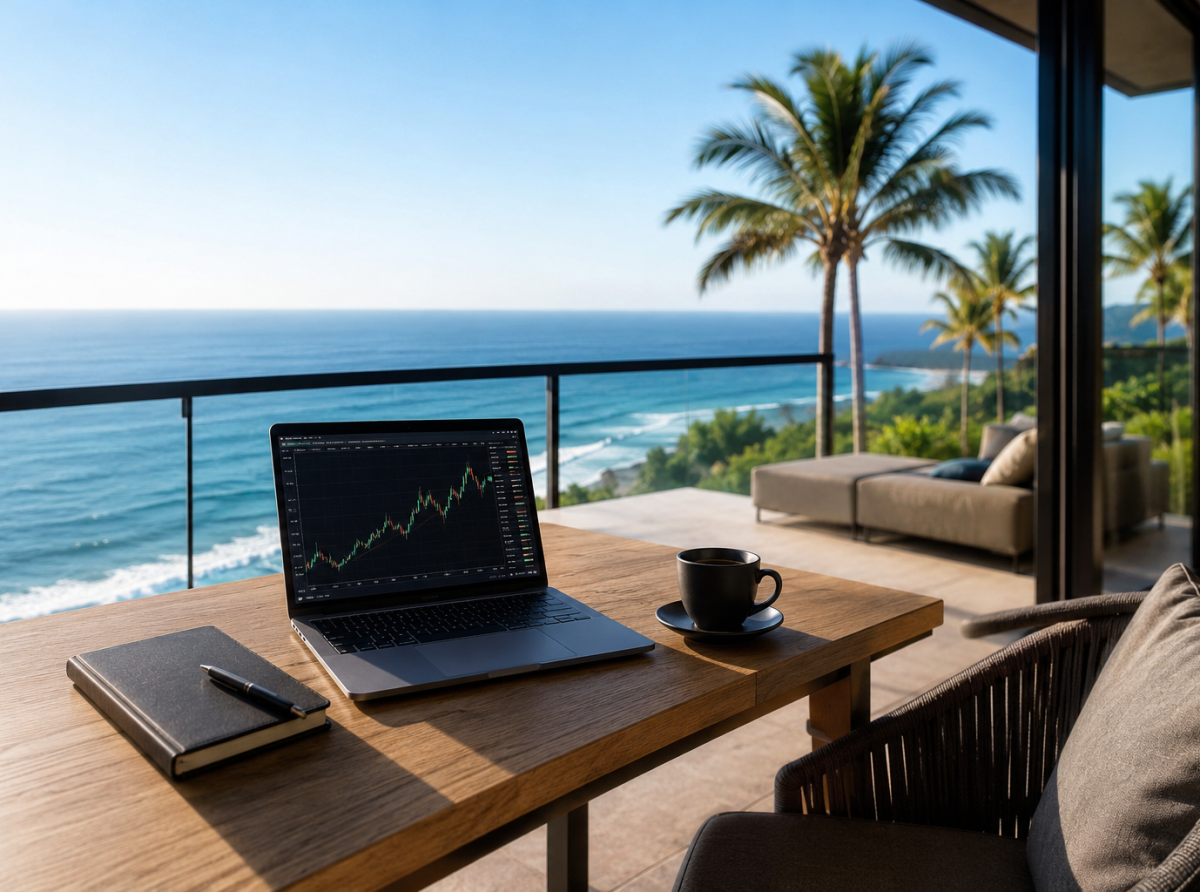
Forex as a Lifestyle: How Trading Changes Worldview and Helps Understand Global Processes
Forex trading reshapes worldview because it forces participants to analyze inflation, monetary policy, geopolitical conflict, liquidity conditions and investor psychology continuously. In 2026, the currency market functions as a real-time map of global economic relationships, teaching traders to think probabilistically, process uncertainty rationally and understand how international systems influence each other.
Forex as a Lifestyle: How Trading Changes Worldview and Helps Understand Global Processes
Forex trading in 2026 is no longer viewed only as a speculative financial activity. For many participants, especially long-term traders, the currency market gradually becomes a framework for understanding the modern world itself. Daily interaction with macroeconomic data, central bank policy, inflation dynamics, geopolitical instability and global capital flows changes not only financial behavior, but also the way traders interpret information, uncertainty and international events.According to discussions across TradingView and Investing.com during May 2026, retail participation in Forex continues growing partly because trading increasingly functions as a practical form of economic education connected directly to real-world political and financial systems. Many experienced traders eventually realize the most important transformation happens not inside the trading terminal, but inside their own thinking.
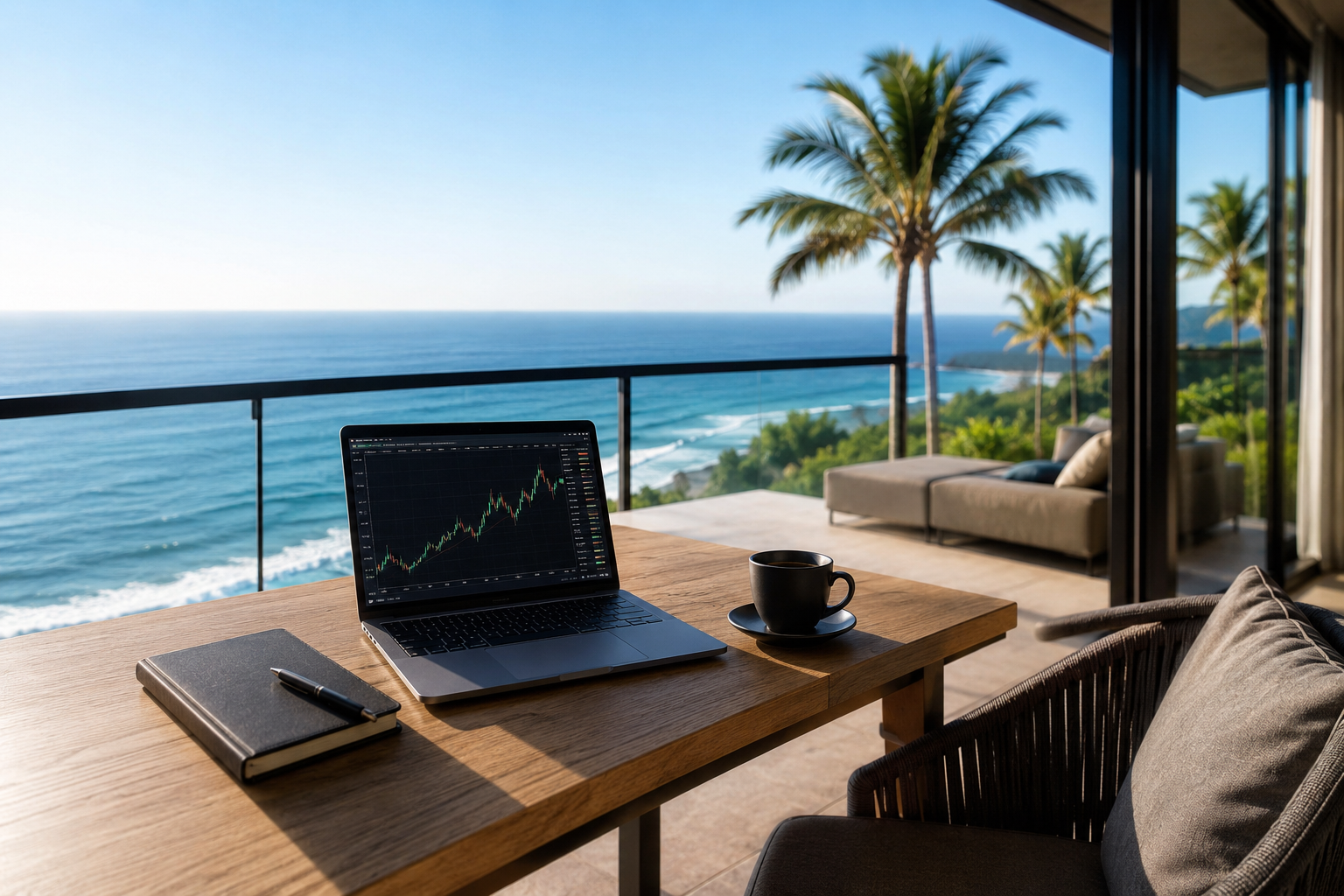
Forex as a Lifestyle: How Trading Changes Worldview and Helps Understand Global Processes
One of the first major psychological changes experienced by traders is the transformation of how they consume information. News stops being passive background noise and becomes economically connected data. Inflation reports, labor-market statistics and central bank speeches begin affecting not only currencies, but also commodities, equities, debt markets and global investment flows simultaneously. A trader following the euro or the US dollar eventually develops a deeper understanding of how decisions made by the Federal Reserve or the European Central Bank influence businesses, governments and consumers across multiple regions at once.
Over time, this changes attention itself. Many traders begin structuring their daily routines around macroeconomic releases and monetary-policy events rather than traditional news cycles. A macro trader from London described the shift during a webinar in April 2026:
“After years in Forex, you stop reacting emotionally to headlines. You automatically begin asking where liquidity moves, who benefits and how markets are positioned.”
That perspective reflects something deeper than financial speculation. It reflects the development of analytical distance.
Forex also changes the way people think about certainty. Most social and professional systems encourage binary thinking built around being correct or incorrect. Financial markets quickly dismantle this illusion. Traders eventually understand that even the strongest analysis can fail because markets react not only to objective facts, but also to expectations, positioning, liquidity conditions and collective psychology.
This became highly visible after stronger-than-expected US inflation data released on May 14, 2026. According to TradingEconomics, the US dollar initially surged across major currency pairs before volatility rapidly reversed as institutional positioning shifted during the session. For inexperienced traders, such price action appears irrational. Experienced participants understand that markets constantly reflect probabilities rather than certainty.
As a result, Forex gradually trains probabilistic thinking. Traders stop asking whether an outcome is guaranteed and begin asking whether the balance of probabilities justifies the risk.
This cognitive transition often affects life outside trading as well.
The currency market constantly exposes emotional weaknesses. Fear, impatience, ego attachment and impulsive behavior become financially measurable in ways that rarely happen in ordinary professional environments. Many traders eventually discover the market acts like a psychological mirror. Emotional instability that might remain hidden elsewhere becomes impossible to ignore once money is involved.
For this reason, experienced traders increasingly focus less on prediction and more on emotional regulation and risk management. According to Yahoo Finance, behavioral-finance education became one of the fastest-growing segments of retail trading platforms throughout 2026 as traders searched for methods to improve discipline during volatile market conditions.
The psychological effects often extend beyond trading itself. Many long-term participants report becoming more patient, less reactive and more comfortable operating under uncertainty. Instead of attempting to eliminate risk completely, traders learn to evaluate and manage it rationally. A proprietary trader from Dubai summarized the transformation during a fintech podcast in May 2026:
“Forex taught me that survival matters more than being right.”
That mindset influences entrepreneurship, investing and financial planning far beyond the trading screen.
Over time, this changes attention itself. Many traders begin structuring their daily routines around macroeconomic releases and monetary-policy events rather than traditional news cycles. A macro trader from London described the shift during a webinar in April 2026:
“After years in Forex, you stop reacting emotionally to headlines. You automatically begin asking where liquidity moves, who benefits and how markets are positioned.”
That perspective reflects something deeper than financial speculation. It reflects the development of analytical distance.
Forex also changes the way people think about certainty. Most social and professional systems encourage binary thinking built around being correct or incorrect. Financial markets quickly dismantle this illusion. Traders eventually understand that even the strongest analysis can fail because markets react not only to objective facts, but also to expectations, positioning, liquidity conditions and collective psychology.
This became highly visible after stronger-than-expected US inflation data released on May 14, 2026. According to TradingEconomics, the US dollar initially surged across major currency pairs before volatility rapidly reversed as institutional positioning shifted during the session. For inexperienced traders, such price action appears irrational. Experienced participants understand that markets constantly reflect probabilities rather than certainty.
As a result, Forex gradually trains probabilistic thinking. Traders stop asking whether an outcome is guaranteed and begin asking whether the balance of probabilities justifies the risk.
This cognitive transition often affects life outside trading as well.
The currency market constantly exposes emotional weaknesses. Fear, impatience, ego attachment and impulsive behavior become financially measurable in ways that rarely happen in ordinary professional environments. Many traders eventually discover the market acts like a psychological mirror. Emotional instability that might remain hidden elsewhere becomes impossible to ignore once money is involved.
For this reason, experienced traders increasingly focus less on prediction and more on emotional regulation and risk management. According to Yahoo Finance, behavioral-finance education became one of the fastest-growing segments of retail trading platforms throughout 2026 as traders searched for methods to improve discipline during volatile market conditions.
The psychological effects often extend beyond trading itself. Many long-term participants report becoming more patient, less reactive and more comfortable operating under uncertainty. Instead of attempting to eliminate risk completely, traders learn to evaluate and manage it rationally. A proprietary trader from Dubai summarized the transformation during a fintech podcast in May 2026:
“Forex taught me that survival matters more than being right.”
That mindset influences entrepreneurship, investing and financial planning far beyond the trading screen.
Forex also expands understanding of international economics in ways traditional education rarely achieves. A trader monitoring USD/JPY eventually becomes aware of how Bank of Japan policy affects bond markets, export competitiveness and international liquidity simultaneously. Someone trading commodity-linked currencies such as the Canadian dollar or Australian dollar naturally begins following energy prices, industrial production and Chinese economic activity because these factors directly influence market behavior.
A trader in Singapore described the experience during a macroeconomic discussion:
“Forex made me realize the global economy behaves less like separate countries and more like one interconnected organism.”
That realization becomes increasingly difficult to ignore after years of observing how rapidly capital flows react to geopolitical events, sanctions, trade conflicts and central-bank decisions.
Modern Forex culture also reinforces global awareness through communication itself. Trading communities increasingly connect participants from Europe, the Middle East, Asia and the Americas in real time. Discussions around inflation, interest rates or commodity markets naturally expose traders to regional perspectives they might otherwise never encounter. This international interaction strengthens understanding of how differently the same economic event can affect various countries and currencies simultaneously.
A trader in Singapore described the experience during a macroeconomic discussion:
“Forex made me realize the global economy behaves less like separate countries and more like one interconnected organism.”
That realization becomes increasingly difficult to ignore after years of observing how rapidly capital flows react to geopolitical events, sanctions, trade conflicts and central-bank decisions.
Modern Forex culture also reinforces global awareness through communication itself. Trading communities increasingly connect participants from Europe, the Middle East, Asia and the Americas in real time. Discussions around inflation, interest rates or commodity markets naturally expose traders to regional perspectives they might otherwise never encounter. This international interaction strengthens understanding of how differently the same economic event can affect various countries and currencies simultaneously.
Many people initially enter Forex searching for additional income or financial independence. Over time, however, trading often evolves into something broader. The market becomes a framework for interpreting uncertainty, information and human behavior at a global scale. Legendary investor George Soros once argued that financial markets constantly reflect imperfect human understanding of reality itself. That observation becomes increasingly clear after years inside international currency markets.
Forex ultimately changes more than financial outcomes.
It changes how people see the world.
Forex ultimately changes more than financial outcomes.
It changes how people see the world.
By Claire Whitmore
May 28, 2026
Join us. Our Telegram: @forexturnkey
All to the point, no ads. A channel that doesn't tire you out, but pumps you up.
May 28, 2026
Join us. Our Telegram: @forexturnkey
All to the point, no ads. A channel that doesn't tire you out, but pumps you up.





Report
My comments