




Forex Market Faces New Tariff Shock as Trump Targets 60 Trading Partners
Forex Market Faces New Tariff Shock as Trump Targets 60 Trading Partners
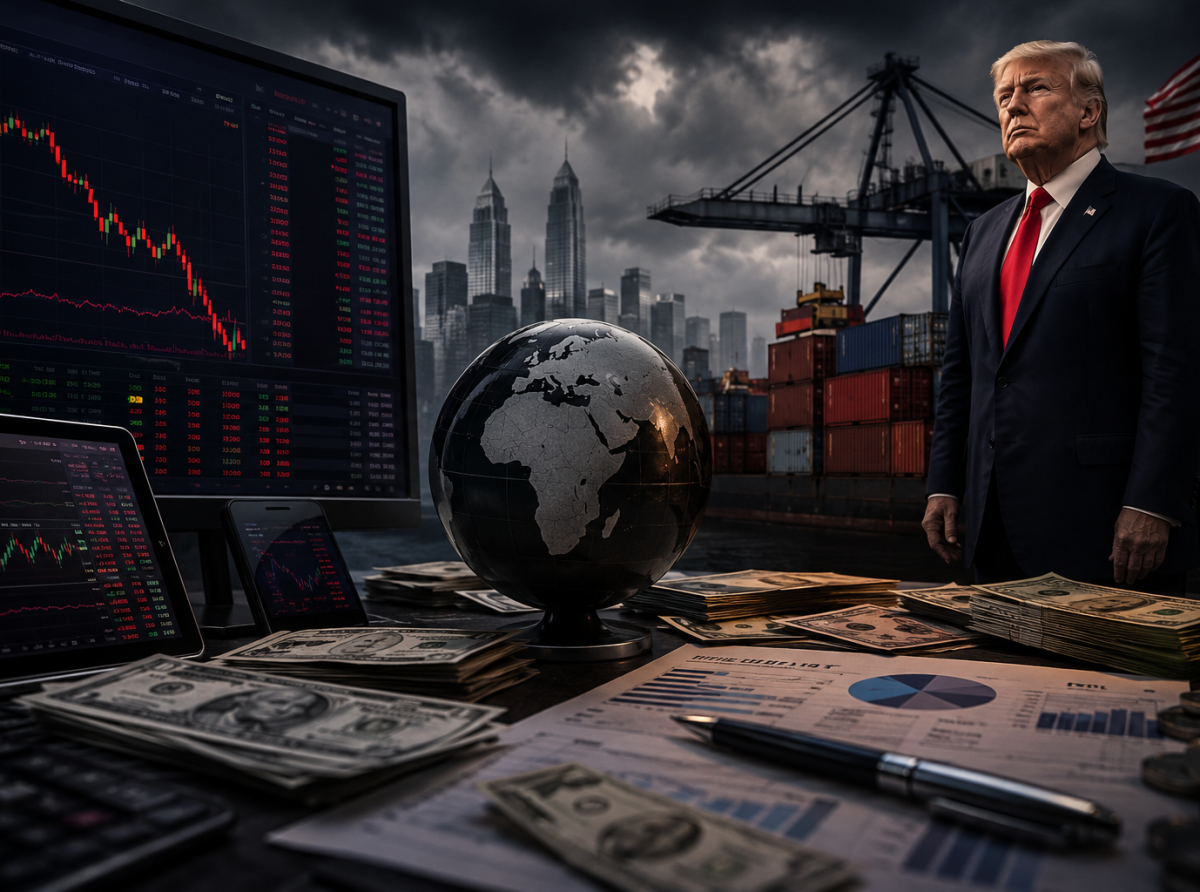
The Forex market is facing a new source of uncertainty after the Trump administration imposed 10% and 12.5% tariffs on goods from 60 trading partners on July 24, 2026, citing failures to prohibit or effectively enforce bans on imports produced with forced labor. The measure covers economies responsible for 99.4% of US imports, although numerous product exemptions and special tariff mechanisms limit the direct impact on some goods.
The tariffs were introduced as a temporary 10% global duty expired and after the US Supreme Court had rejected the administration’s earlier broad reciprocal tariffs imposed under emergency powers. For currency traders, the immediate issue is not simply the size of the new duties but the possibility that tariffs will once again become a recurring instrument of US economic policy.
That creates a more complicated environment for the US dollar, the euro, Asian currencies and emerging-market FX, because trade restrictions can simultaneously influence inflation expectations, economic growth, interest-rate forecasts, capital flows and risk sentiment.
For Forex brokers, the consequences are equally practical: periods of tariff-related uncertainty can increase client activity, widen the gap between expected and actual market conditions, raise demand for risk controls and expose weaknesses in execution, liquidity and infrastructure.
The tariffs were introduced as a temporary 10% global duty expired and after the US Supreme Court had rejected the administration’s earlier broad reciprocal tariffs imposed under emergency powers. For currency traders, the immediate issue is not simply the size of the new duties but the possibility that tariffs will once again become a recurring instrument of US economic policy.
That creates a more complicated environment for the US dollar, the euro, Asian currencies and emerging-market FX, because trade restrictions can simultaneously influence inflation expectations, economic growth, interest-rate forecasts, capital flows and risk sentiment.
For Forex brokers, the consequences are equally practical: periods of tariff-related uncertainty can increase client activity, widen the gap between expected and actual market conditions, raise demand for risk controls and expose weaknesses in execution, liquidity and infrastructure.
Why the New US Tariffs Matter for the Forex Market
The latest tariff action is significant because it expands the trade policy mechanism rather than simply increasing duties on one specific product or one individual country. According to the White House memorandum dated July 23, 2026, the US launched Section 301 investigations into 60 economies over their failure to impose and effectively enforce prohibitions on imports produced with forced labor. The final action applies a 10% or 12.5% tariff depending on the commitments made by the relevant trading partner and the structure of existing trade arrangements.The headline figure is broad: the measure applies to the top 60 US trading partners and covers 99.4% of US imports, although the practical impact varies considerably because raw materials, products vulnerable to domestic shortages, certain goods subject to other tariff regimes and other categories can be exempted. This means that the headline percentage should not be treated as a uniform tax on every product entering the United States. The real economic effect will depend on the final product list, supply-chain exposure and the ability of companies to pass higher costs through to consumers.
For the FX market, however, the political signal may be as important as the immediate trade impact. The administration is attempting to restore a broad tariff framework after the Supreme Court struck down its earlier reciprocal duties. The new action relies on Section 301 of the Trade Act of 1974, a different legal mechanism that the administration has used to target foreign practices considered harmful to US commerce. That shift matters because traders must now assess not only the economic consequences of individual tariffs but also the possibility of a more permanent and flexible tariff architecture.
A trader watching EUR/USD, USD/JPY, USD/CAD or emerging-market currencies is therefore dealing with more than a single policy announcement. The question is whether tariffs will remain a temporary shock, become part of a continuing negotiation strategy or generate retaliatory measures that alter the global trade environment.
Forex Market Faces New Tariff Shock as Trump Targets 60 Trading Partners
The First Market Reaction May Not Be the Most Important One
Tariffs often produce an immediate market reaction, but the first move in a currency pair does not necessarily reveal the final economic effect. The US dollar can receive support from safe-haven demand when trade tensions rise, yet the same tariffs can increase domestic inflation expectations and complicate the Federal Reserve’s policy outlook. If investors begin to believe that tariffs will push prices higher while weakening economic activity, the dollar may face conflicting forces rather than a simple bullish or bearish narrative.This is where the current situation becomes particularly relevant for Forex traders. A tariff can theoretically support the currency of the country imposing it through expectations of reduced imports and stronger demand for domestic goods. At the same time, tariffs can raise production costs, reduce trade volumes and provoke retaliation. The resulting currency reaction depends on which of these forces dominates and how the market has already priced the policy.
For the euro, the consequences depend heavily on the final scope of the measures affecting European goods and the response from the EU. For Asian currencies, the issue is connected to supply chains, manufacturing exposure and the sensitivity of regional economies to changes in US demand. For emerging markets, the key risk is that a broad increase in trade uncertainty may encourage capital to move toward more liquid assets and the US dollar.
A currency trader does not need to assume that every tariff announcement will automatically produce a sustained dollar rally. The more useful question is whether the policy changes the expectations for growth, inflation and monetary policy.
Key market variables
US tariff scope: 10% or 12.5% additional duties depending on the trading partner and applicable arrangements.Coverage: economies representing 99.4% of US imports.
Legal framework: Section 301 of the Trade Act of 1974.
Key market transmission channels: inflation, growth, interest rates, trade flows and risk sentiment.
Main FX exposure: USD, EUR, JPY, CAD and emerging-market currencies.
The End of the Temporary Global Tariff Changes the Policy Signal
The timing of the new measures is important. The administration introduced them as a temporary 10% global tariff expired, creating the impression that the US is replacing one broad tariff mechanism with another rather than abandoning the general policy direction.
This distinction matters to financial markets because uncertainty is often created not only by the size of a policy but by the difficulty of predicting what comes next. If traders believe that tariff announcements will continue to appear through different legal channels, the market may begin to assign a higher risk premium to international trade.
That risk premium can influence currency markets even before the full economic consequences are visible in official data.
A portfolio manager in Europe, for example, may not immediately change the strategic allocation because of a 10% or 12.5% tariff. However, if the policy creates uncertainty around future access to the US market, the expected growth outlook for exporters can change. A US company may reassess supply chains. An Asian manufacturer may review production locations. A central bank may consider the inflationary consequences of higher import costs.
The currency market reacts to these expectations before the data becomes visible in quarterly economic statistics.
Why Inflation and Central Banks Are at the Centre of the FX Reaction
Tariffs create a difficult policy combination because they can influence both prices and growth. If imported goods become more expensive, inflationary pressure can increase. If trade volumes decline and companies reduce investment, economic growth can weaken.
For central banks, this creates a more complicated policy environment.
A stronger inflation impulse could argue for tighter monetary policy, while weaker growth could argue for a more cautious approach. The final impact depends on the size, duration and transmission of the tariff shock.
This is particularly important for the Federal Reserve. The dollar does not respond to tariffs in isolation; it responds to the market’s expectations for US monetary policy relative to other central banks. If tariffs increase inflation expectations and lead traders to reduce expectations for rate cuts, the dollar could receive support. If the same tariffs are interpreted as a serious threat to economic growth, the reaction could become less straightforward.
The same logic applies to the European Central Bank, the Bank of Japan and other monetary authorities. A global trade shock can produce different effects in different economies depending on their exposure to US demand, supply chains and domestic inflation.
For traders, the most important variable may therefore be the difference between what markets expected before the announcement and what the new policy changes.
The Real Risk May Be Retaliation
The US has presented the new tariffs as a response to trade practices connected to forced-labor import restrictions. However, the targeted trading partners may view the measures as unjustified and could respond through diplomatic or economic channels. The possibility of retaliation creates a second layer of risk.A tariff imposed by one country can raise costs for exporters. A retaliatory tariff can then affect US companies and consumers, creating a feedback loop that expands the economic impact beyond the original measure.
This is the point at which a trade dispute can become a broader market event.
The effect on currencies depends on the scale of the response. A limited diplomatic disagreement may have little lasting impact. A coordinated retaliation involving major trading partners could change expectations for global growth and increase demand for defensive assets.
The US administration has already faced criticism from several trading partners, while the official US position is that the measures are intended to address what it considers both a human-rights issue and a trade distortion. The political disagreement therefore has the potential to continue even if the immediate tariff impact on some products remains limited.
What This Means for Forex Brokers
For Forex brokers, tariff-driven uncertainty is not an abstract macroeconomic issue. It directly affects the operating environment in which clients trade.The first impact is likely to appear in client behaviour. When major trade policy changes are announced, retail traders often increase their attention to currency pairs connected to the countries involved. That can lead to higher trading volumes, but it can also create more concentrated exposure around the same events.
A broker may see increased demand for USD pairs, euro-related instruments, Japanese yen and commodity-linked currencies such as the Canadian dollar. At the same time, the concentration of client positions can increase the risk that many traders are positioned in the same direction before a sudden reversal.
This makes execution quality particularly important.
During periods of political uncertainty, the market can move rapidly when new statements appear or when another country announces a response. A broker with weak liquidity management may face more difficult conditions than a broker with diversified liquidity sources and a reliable execution infrastructure.
The second impact concerns risk controls. When volatility rises, margin requirements, exposure limits and monitoring systems become more important. A sudden market movement can create a significant difference between the price at which a client expects to be executed and the price available in the market.
The third impact is operational. If tariff policy becomes a recurring source of volatility, brokers need to treat political and trade announcements as part of their market-risk calendar rather than as occasional news events.
In practice, many retail traders react to the headline first and analyse the economic consequences later. Brokers therefore face the dual challenge of managing increased activity while maintaining the infrastructure needed to process rapid changes in order flow.
The Infrastructure Question Is Becoming More Important
A broker can have a strong trading product and competitive spreads, but the value of those advantages is tested during periods of market stress.If a platform becomes unstable, if data feeds are delayed or if execution capacity is insufficient when volatility rises, the client experience can deteriorate precisely when traders are most active.
The new tariff environment reinforces the importance of infrastructure capable of handling sudden changes in demand. This includes stable trading servers, low-latency connectivity, reliable price feeds, liquidity-provider diversification and monitoring systems that can detect abnormal conditions.
The connection between macroeconomic news and infrastructure is often underestimated. A tariff announcement may appear to be a political event, but the market response can create a sudden operational challenge for a broker.
A trader may open or close a position within seconds of a headline. Thousands of other traders may attempt to do the same. The quality of the broker's systems becomes part of the client's risk environment.
This is one of the clearest practical consequences of the current tariff cycle: market volatility is not only a pricing issue. It is also a technology and risk-management issue.
A New Environment for USD, EUR and Emerging-Market FX
The impact of the new tariffs will not be distributed evenly across the currency market.The US dollar remains the central instrument because the policy originates in Washington and the tariffs affect US trade conditions. However, the dollar's direction will depend on the interaction between safe-haven demand, inflation expectations, Federal Reserve policy and the reaction of trading partners.
The euro is particularly sensitive to the relationship between the US and the European Union. Any deterioration in trade expectations can affect the outlook for European exporters and influence expectations for the European Central Bank.
The Japanese yen can become important if global investors move toward defensive positioning, although the currency also responds to interest-rate differentials and domestic monetary policy.
The Canadian dollar and other commodity-linked currencies can be affected through changes in trade expectations, global growth and commodity demand, although the specific impact depends on exemptions and the structure of bilateral trade.
Emerging-market currencies face a different combination of risks. Reduced global risk appetite, weaker export expectations and capital outflows can increase pressure on currencies with lower liquidity.
This does not mean that every emerging-market currency will decline. It means that the market may become more selective, increasing the importance of local fundamentals and external financing conditions.
From a Trader’s Desk: The Headline Is Not the Trade
Imagine a trader sees the headline that the United States has imposed tariffs on 60 trading partners and immediately buys the dollar. The first market reaction appears to support the position, but several hours later investors begin focusing on the possibility of retaliation and the impact on US growth. The dollar reverses, and the original trade becomes a loss.The problem was not necessarily the decision to consider the dollar.
The problem was treating a complex policy event as a one-directional signal.
A more robust approach is to separate the initial headline from the transmission mechanism. What happens to inflation? What happens to growth? How might the Federal Reserve react? Will trading partners retaliate? Does the market already expect these developments?
The best market decisions are often made not by reacting fastest to a headline but by understanding which second-order effects can change the first reaction.
The Next 12–24 Months Could Bring More Policy-Driven Volatility
The latest tariff action suggests that trade policy will remain an important source of market uncertainty. The US administration has demonstrated its willingness to use different legal mechanisms to impose tariffs, while trading partners continue to assess whether negotiation or retaliation is the more effective response.Over the next one to two years, the Forex market may therefore face a more fragmented policy environment in which trade restrictions, industrial policy and geopolitical negotiations increasingly influence currency valuation.
For traders, this means that traditional macroeconomic analysis may need to place greater emphasis on political developments and legal mechanisms. For brokers, the implication is even more practical: volatility should be treated as a recurring operating condition rather than an exceptional event.
The key competitive advantage may belong to firms that can combine reliable execution, strong liquidity management, transparent risk controls and technology capable of handling sudden changes in trading activity.
Tariffs Are Becoming a Forex Variable
The new US tariffs on 60 trading partners are not simply another trade-policy announcement. They represent another stage in the transformation of tariffs into a recurring instrument of economic and political pressure.The immediate duties of 10% and 12.5% will affect different economies and products in different ways, while exemptions will limit the direct impact on some categories. But the broader market consequence lies in the uncertainty surrounding future policy decisions, retaliation, inflation and central-bank responses.
For Forex traders, the central task is to avoid treating tariff headlines as automatic buy or sell signals. The important question is how the policy changes expectations for growth, inflation, interest rates and capital flows.
For Forex brokers, the consequences extend to client behaviour, liquidity, execution, margin management and infrastructure resilience. When a political announcement can quickly change market expectations, the quality of a broker's technology becomes part of the trading experience.
The new tariff cycle is therefore a reminder that modern Forex markets are shaped not only by economic statistics and central-bank decisions. They are also increasingly shaped by policy shocks that can arrive suddenly, move across borders and test both traders and the systems that support them.
For the market, the tariff is the headline. For a broker, the real test begins when clients start trading it.
Written by Ethan Blake
Independent researcher, fintech consultant, and market analyst.
July 24, 2026
Join us. Our Telegram: @forexturnkey
All to the point, no ads. A channel that doesn't tire you out, but pumps you up.
Independent researcher, fintech consultant, and market analyst.
July 24, 2026
Join us. Our Telegram: @forexturnkey
All to the point, no ads. A channel that doesn't tire you out, but pumps you up.





Report
My comments