




Iran War Live – Houthis Open a Second Oil Chokepoint in the Red Sea
Iran War Live – Houthis Open a Second Oil Chokepoint in the Red Sea
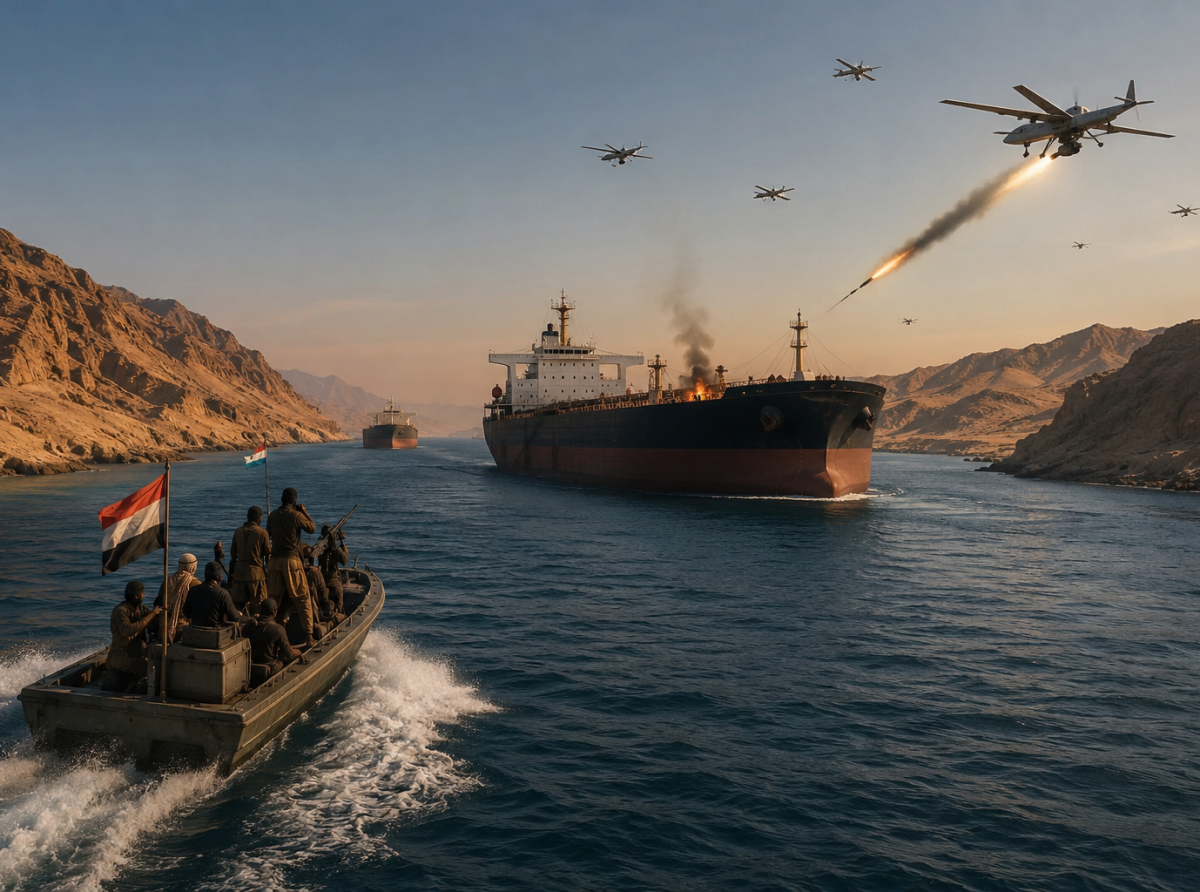
The Houthis on July 20 declared a maritime embargo on Saudi Arabia and have since claimed missile and drone strikes on two Saudi oil tankers transiting the Red Sea, putting the Bab el‑Mandeb — a corridor that, if closed, can affect roughly 7% of global oil flows — at immediate risk and raising the prospect of simultaneous pressure on both Bab el‑Mandeb and the Strait of Hormuz (markets already watch Hormuz closely), a combination that could push crude prices sharply higher if disruptions persist (data and reporting through July 20–21, 2026).
Definitions and strategic context
The Houthis are an Iran‑aligned armed movement controlling territory in western Yemen, including coastal areas near Bab el‑Mandeb, the narrow passage linking the Red Sea with the Gulf of Aden and the Indian Ocean; their new “maritime embargo” effectively amounts to a declared naval blockade of Saudi shipping in those waters. Bab el‑Mandeb is a critical energy corridor: analysts and reporting note that a sustained closure would force tankers to reroute around southern Africa, add shipping time and cost, and could remove an estimated several percent of seaborne flows.From local conflict to global chokepoint risk
Timeline and actions: on July 20 the Houthi leadership publicly announced the blockade; within days the group claimed attacks — using missiles and drones — on two Saudi oil tankers transiting the Red Sea, saying the vessels breached the embargo and suffered fires and damage. These moves convert a local proxy escalation into a direct threat to commerce: whereas markets have previously concentrated on the Strait of Hormuz amid U.S.–Iran hostilities, the Red Sea now represents a second flank that could simultaneously constrain flows to Europe and Asia.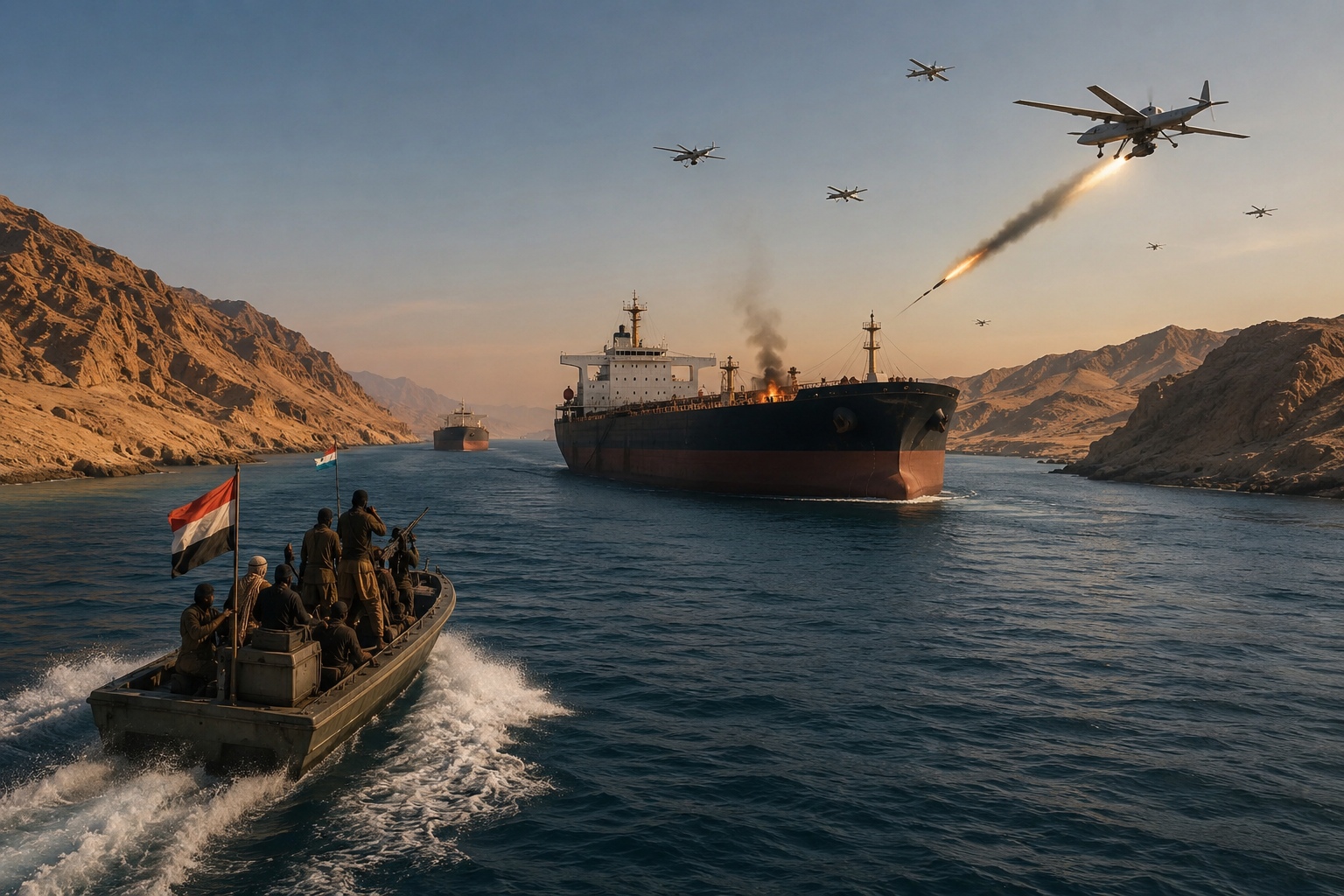
Iran War Live – Houthis Open a Second Oil Chokepoint in the Red Sea
Market mechanics — what breaks, and what moves prices
Immediate market reactions: shipowners and charterers are already rerouting or delaying voyages, insurers are lifting war‑risk premiums, and refiners are activating contingency plans — all raising effective costs even before any full closure. Forecasted impacts include higher crude prices if attacks continue or Bab el‑Mandeb is functionally closed, surging freight and insurance costs for alternate routings around Africa, and knock‑on effects on refined products and inflation as fuel and transport costs rise.Some analysts warn prices could jump back toward the triple‑digits (reports cite scenarios above $115–$120/b if disruptions become severe), though workarounds and strategic reserve draws could blunt the worst outcomes.
Military and political dynamics
U.S. and allied military posture: Washington has carried out repeated strikes on Iranian targets in response to regional escalation, marking sustained military pressure and signaling readiness to hit proxies that threaten shipping. Politically, statements from U.S. leadership — framed as holding Tehran responsible for proxy actions — and Riyadh’s pledge of a firm response to the blockade raise the danger of wider confrontation, complicating diplomatic efforts to stabilise oil flows.Practical implications for traders and industry
Short‑term trade moves and hedges: traders should expect elevated volatility, widening differentials for barrels requiring risky transit, and higher backwardation in regional crude benchmarks as safety‑first buyers compete for accessible cargoes. Logistics and operations: refiners and shippers will evaluate alternate loading hubs, use longer voyage routes around the Cape of Good Hope, and increase reliance on insurance and war‑risk layers; each option raises costs and delays supply, pressuring product markets.Case vignette (real example): a tanker reportedly hit in the Red Sea after being accused of breaching the embargo ignited fires and damage on board, according to Houthi military spokesmen — an incident that illustrates how quickly a localized strike can force insurers and charterers to re‑price whole routes.
Regional and global outlook
Regional spread: if the Houthis sustain attacks while Iran continues to contest the Strait of Hormuz, markets could face dual chokepoint risk — a strategic scenario that would strain alternative routes and challenge spare capacity buffers. Global perspective: Europe, the United States, and Asian refiners will monitor insurance availability, shipping delays, and official responses; policy coordination (naval escorts, intelligence sharing, strategic reserve releases) will determine whether the situation becomes a full‑blown supply shock.Structured metrics and recent datapoints (as reported)
Date of Houthi blockade announcement: July 20, 2026.
Claimed tanker strikes: two Saudi‑flagged or Saudi‑linked tankers (Houthis claim missile/drone attacks; damage reported by the group).
Estimated potential supply impact if Bab el‑Mandeb were closed: Reuters reporting cites around 7% of global oil flows at risk.
Military tempo: U.S. reported multiple consecutive nights of strikes on Iranian targets in the same period.
The Houthis’ declared blockade and claimed tanker attacks turn the Red Sea from a hazard corridor into an active theater of conflict with immediate consequences for shipping, insurance and oil markets; if attacks persist and Iran continues pressure in Hormuz, traders and policymakers may confront a dual chokepoint scenario that could ignite another major price shock.
Written by Ethan Blake
Independent researcher, fintech consultant, and market analyst.
July 23, 2026
Join us. Our Telegram: @forexturnkey
All to the point, no ads. A channel that doesn't tire you out, but pumps you up.
Independent researcher, fintech consultant, and market analyst.
July 23, 2026
Join us. Our Telegram: @forexturnkey
All to the point, no ads. A channel that doesn't tire you out, but pumps you up.





Report
My comments