




Oil Rises for a Fourth Straight Session as US-Iran Conflict Raises New Risks for Forex Brokers
Oil Rises for a Fourth Straight Session as US-Iran Conflict Raises New Risks for Forex Brokers
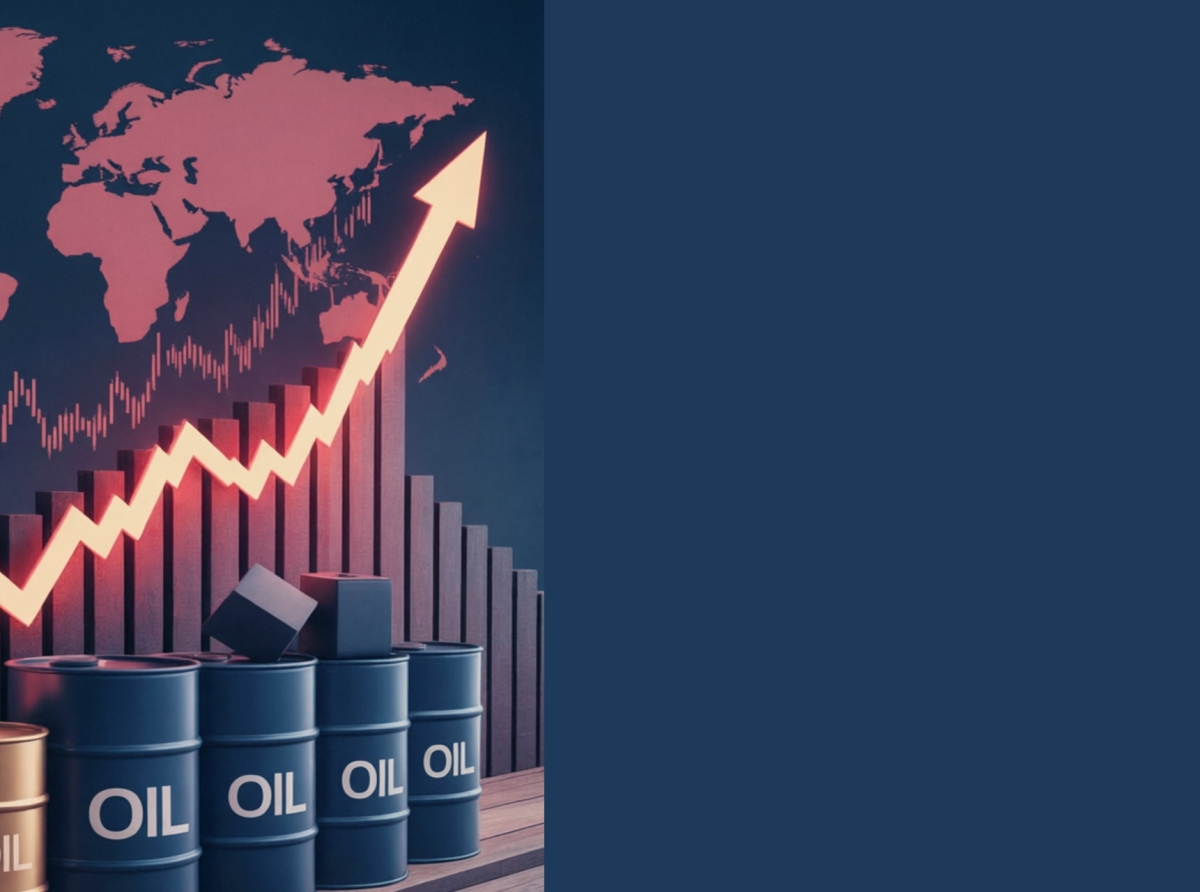
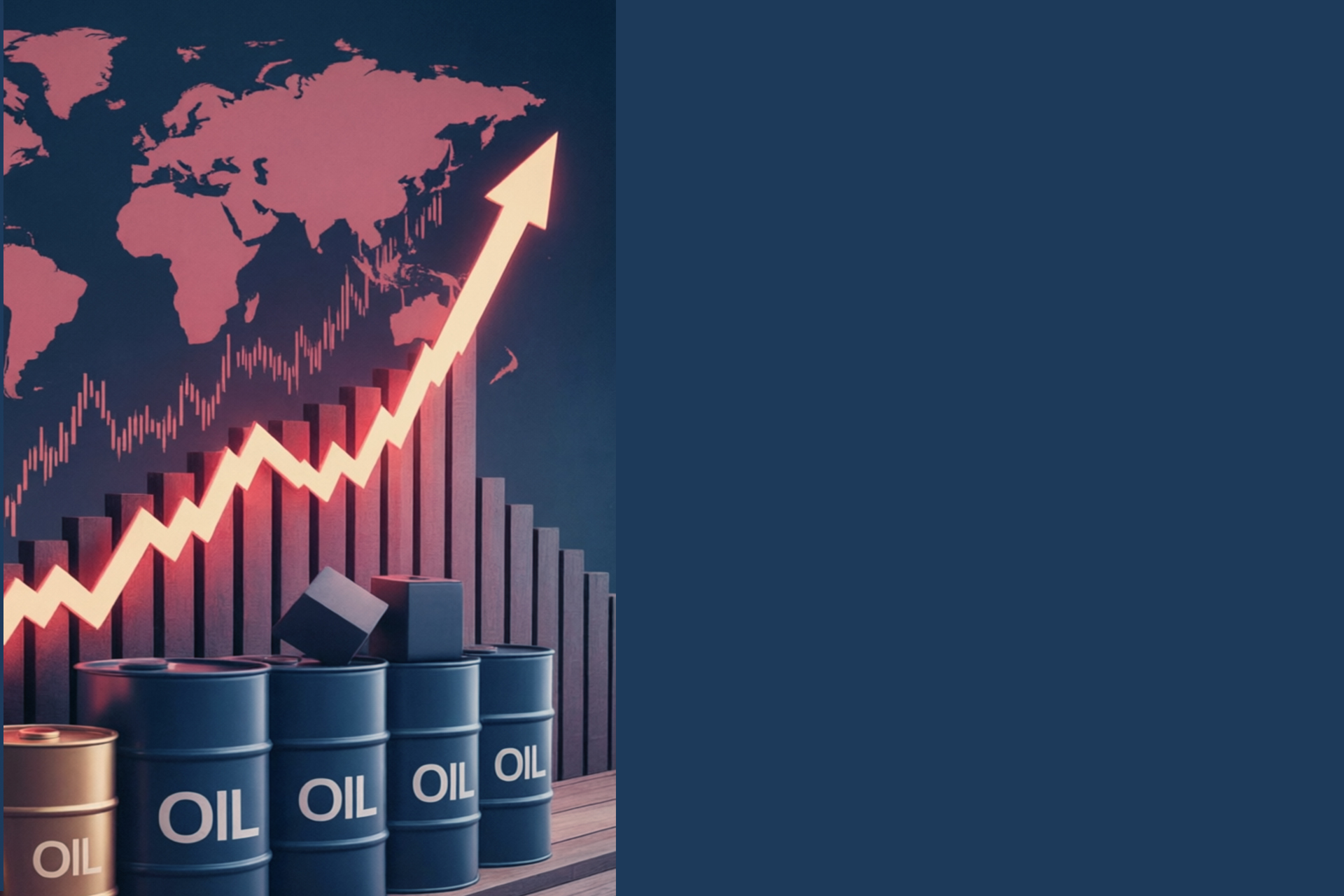
Oil prices rose for a fourth consecutive session as markets assessed the escalation of military confrontation between the United States and Iran and the growing risk of disruption to energy supplies across the Middle East. Brent futures for September delivery climbed 0.6% to $91.55 per barrel, while West Texas Intermediate gained 0.4% to $84.69, keeping both benchmarks near their highest levels since mid-June.
The market is pricing in a growing geopolitical risk premium as US strikes on Iranian military infrastructure continue, Tehran responds with attacks on American positions across the region and threats to maritime traffic increase. Concerns have also intensified after Yemen’s Houthi movement threatened a maritime blockade affecting vessels linked to Saudi Arabia, forcing some oil tankers to change routes and increasing concerns about transportation, insurance and freight costs.
At the same time, API data showed that US crude inventories increased by 2.603 million barrels, contrary to expectations for a 1.5 million-barrel decline. For Forex brokers, the combination of geopolitical escalation, energy-market uncertainty and rapidly changing correlations creates a direct test for liquidity, execution quality, risk management and trading infrastructure.
The market is pricing in a growing geopolitical risk premium as US strikes on Iranian military infrastructure continue, Tehran responds with attacks on American positions across the region and threats to maritime traffic increase. Concerns have also intensified after Yemen’s Houthi movement threatened a maritime blockade affecting vessels linked to Saudi Arabia, forcing some oil tankers to change routes and increasing concerns about transportation, insurance and freight costs.
At the same time, API data showed that US crude inventories increased by 2.603 million barrels, contrary to expectations for a 1.5 million-barrel decline. For Forex brokers, the combination of geopolitical escalation, energy-market uncertainty and rapidly changing correlations creates a direct test for liquidity, execution quality, risk management and trading infrastructure.
Oil Is Rising, but the Market Is Pricing More Than Supply and Demand
The oil market is once again becoming one of the clearest indicators of geopolitical risk.Brent and WTI have now advanced for four consecutive sessions, with both benchmarks holding near levels not seen since mid-June. The immediate catalyst is the escalating military confrontation between Washington and Tehran and the growing possibility that the conflict could affect the movement of energy supplies across the region.
US military forces reportedly continued strikes against Iranian military targets, including missile and drone launchers, command centres and air-defence systems.
Iran, meanwhile, continued attacks against US military positions in the region, including locations in Bahrain, Kuwait and Jordan.
For oil markets, the key issue is not simply the number of military strikes.
The central question is whether the conflict can interfere with the physical infrastructure and maritime routes that connect major oil producers with global consumers.
That is where geopolitical risk begins to translate directly into an oil premium.
Markets do not need to wait for a complete interruption of supply before prices react. If traders believe that transportation routes, tanker movements or export infrastructure could become more difficult to use, the potential future disruption can be reflected in prices immediately.
This is why oil can rise even when inventory data points in the opposite direction.
Why Maritime Risks Are Becoming More Important for Oil Prices
The threat of a maritime blockade involving vessels connected to Saudi Arabia has added another layer of uncertainty to the energy market.The possibility has already prompted some oil tankers to change their routes.
This creates a chain reaction.
Longer routes increase delivery times. Higher security risks increase insurance costs. Reduced availability of shipping capacity can increase freight rates.
Even if the physical volume of oil available to the global market does not immediately decline, the cost and complexity of moving that oil can increase substantially.
The situation is particularly sensitive because maritime traffic in the region is already under pressure from military activity near the Strait of Hormuz.
The strait is one of the most strategically important energy routes in the world. Any prolonged disruption would have implications far beyond the countries directly involved in the conflict.
For the oil market, the risk is therefore not limited to whether a specific tanker is attacked.
The larger concern is whether the cost of transporting energy begins to rise across the entire region. That possibility is enough to increase the risk premium.
Oil Rises for a Fourth Straight Session as US-Iran Conflict Raises New Risks for Forex Brokers
Why This Matters to Forex Brokers
A sharp rise in oil prices is not an isolated event for the Forex market.Energy prices influence inflation expectations, trade balances, interest-rate expectations and investor risk appetite.
When oil rises rapidly, the impact can spread across multiple asset classes.
Currencies of major energy exporters may react differently from those of large energy importers. The US dollar may be influenced by both safe-haven demand and changing expectations for US monetary policy. Equity markets may respond to concerns about higher input costs.
The result is a more complex trading environment.
For Forex brokers, this matters because clients do not trade in isolated markets.
A trader may open a position in Brent, then hedge exposure through a currency pair. Another may trade the US dollar in response to a geopolitical headline. A third may move into safe-haven assets.
The same news event can therefore generate activity across several instruments at the same time. This can create a sudden increase in order flow.
And when order flow increases faster than available liquidity, execution conditions can change quickly.
The Real Challenge Is Not Oil Volatility. It Is Speed.
Volatility itself is not necessarily a problem for a broker.
Active markets can generate higher trading volumes and increased client engagement.
The challenge appears when the speed of market movement exceeds the ability of the infrastructure to process the activity smoothly.
During a geopolitical shock, traders may react to a single headline within seconds.
They may open positions, close existing trades, adjust stop-loss levels and hedge exposure almost simultaneously. The number of requests sent to trading systems can rise sharply.
At the same time, liquidity providers may adjust their pricing and risk parameters as market conditions deteriorate.
This creates a difficult environment for execution.
Spreads can change.
Available market depth can decrease.
Prices can move rapidly between the time an order is submitted and the time it is executed.
For the broker, this is where technology becomes directly connected to risk management.
A system that operates smoothly during normal market conditions may face entirely different demands during a sudden geopolitical event.
Liquidity Becomes a Strategic Issue
In a stable market, liquidity is often taken for granted.Quotes are available. Orders are processed.
Spreads remain within expected ranges.
Geopolitical shocks can change all three conditions.
Liquidity providers may reduce exposure. Market depth may become thinner. Pricing may become more volatile.
This is why a diversified liquidity structure is particularly important during periods of geopolitical stress.
A broker that depends too heavily on a single source of liquidity may face additional operational risk if that source changes its pricing or risk parameters during a market shock.
The issue is not simply the number of liquidity providers.
The quality of liquidity aggregation, routing and risk monitoring also becomes important.
A broker must be able to understand how market conditions are changing across instruments and how client exposure is developing in real time.
Oil volatility can create risks that appear in other markets several minutes later.
The connection between commodities and currencies may change rapidly.
A system that monitors only one asset class may therefore fail to capture the full risk picture.
The API Inventory Data Adds a Second Market Signal
Geopolitical risk is not the only factor influencing oil prices.The American Petroleum Institute reported that US crude inventories increased by 2.603 million barrels during the latest week.
The market had expected inventories to decline by approximately 1.5 million barrels.
The difference between expectations and reality is significant.
Normally, an unexpected increase in crude inventories can create downward pressure on oil prices because it suggests that supply may be stronger than anticipated or demand may be weaker.
However, the current market is also dealing with geopolitical risks that could affect future supply and transportation.
This creates a conflict between two different signals.
Inventory data points toward greater availability.
Geopolitical risk points toward potential future disruption.
The oil price reflects the balance between those expectations.
The official EIA data later in the week could therefore become another catalyst for volatility.
If the EIA confirms a substantial inventory build, the market could receive a bearish fundamental signal.
If the data shows a different picture, or if geopolitical tensions intensify at the same time, the reaction could be significantly stronger.
For brokers, such events are important because scheduled data releases and unexpected geopolitical headlines can create overlapping waves of trading activity.
Why Geopolitical Events Are More Difficult to Manage Than Economic Releases
A scheduled economic indicator gives a broker time to prepare.The release time is known. Market expectations are visible.
Risk teams can monitor exposure before the data appears.
Military escalation is different.A new strike, government statement or threat to maritime traffic can emerge at any moment.
There is no reliable timetable. This makes geopolitical risk particularly challenging for brokerage infrastructure.
The broker must be prepared for an event that may occur outside the expected trading cycle and may trigger simultaneous activity across commodities, currencies and indices.
This is why stability, redundancy and scalability are essential.
If a marketing campaign has brought a large number of new clients to a platform, a sudden geopolitical shock can create a particularly difficult combination.
The broker may experience higher user activity and higher market volatility at exactly the same time.
The result is a direct stress test for the entire operating model.
Why Infrastructure Can Become a Competitive Advantage
Trading technology is often presented as a product feature.
During a crisis, it becomes a competitive advantage.
A broker cannot control the direction of oil prices.
It cannot prevent a geopolitical headline from triggering a market move.
But it can control how its infrastructure responds.
Stable servers, reliable connectivity, effective risk management and robust execution systems help determine whether the platform continues to operate under pressure.
The quality of the infrastructure becomes especially visible when the market moves quickly.
A delayed quote, failed order request or unstable platform can significantly damage client confidence.
This is why infrastructure should not be treated as a purely technical issue.
For a Forex broker, infrastructure directly affects the client experience, operational risk and reputation.
Oil Volatility Can Change Correlations Across Markets
One of the most difficult aspects of geopolitical markets is that historical correlations can become less reliable.A relationship that usually works in a stable environment may weaken or reverse during a crisis.
Oil may rise because of supply concerns.The dollar may strengthen because of safe-haven demand.
At the same time, changing interest-rate expectations may create another source of pressure on the currency market.
The result is a market driven by several competing forces.
For brokers, this increases the importance of real-time risk monitoring.
Client exposure should not be analysed only by instrument.
The same underlying event may create correlated positions across oil, currencies and indices.
A client portfolio that appears diversified under normal conditions may become highly concentrated during a geopolitical shock.
This is one of the reasons why modern brokerage infrastructure increasingly relies on integrated analytics and real-time exposure monitoring.
What Traders Expect From a Broker During a Geopolitical Shock
The trader does not see the entire liquidity network.The trader does not see the internal risk engine.
The trader does not see the server architecture.
The trader sees whether the platform works.
They see whether prices update.
They see whether orders are processed.
They see the execution result.
This creates a clear relationship between technical infrastructure and client trust.
During normal market conditions, infrastructure problems may be considered an inconvenience.
During a sharp market move, the same problem can directly affect a trader's position.
This is why brokerages operating in volatile markets must consider infrastructure as part of their broader risk-management strategy.
The technology must be capable of supporting rapid changes in order flow while maintaining operational stability.
The New Oil Rally Is a Test for the Brokerage Industry
The current oil rally demonstrates how quickly geopolitical events can move from international politics into financial markets.A conflict between major powers creates uncertainty around energy supplies.
Threats to maritime traffic create logistical risks.
Higher oil prices influence inflation expectations and currencies.
The resulting volatility increases pressure on trading infrastructure.
For Forex brokers, the consequences are clear.
The market environment requires more than competitive spreads and a familiar trading platform.
It requires resilient infrastructure, diversified liquidity, effective monitoring and the ability to scale during sudden increases in activity.
The most important question is not whether the next geopolitical headline will move the market. It almost certainly will.
The question is whether the broker is prepared for the speed and scale of the reaction.
Geopolitical Risk Starts With a Headline and Ends With Infrastructure
Oil is rising for a fourth consecutive session as the US-Iran conflict increases uncertainty around energy supplies and maritime transportation across the Middle East. The potential impact extends far beyond Brent and WTI.Higher energy prices can influence currencies, inflation expectations, interest-rate projections and global risk sentiment.
For Forex brokers, this creates a complex operational environment in which market volatility and client activity can increase simultaneously.
The result is a direct test of liquidity, execution, risk management and infrastructure.
A geopolitical crisis may begin with a headline.
But for a broker, its consequences are measured in order flow, execution quality, system stability and client confidence.
In volatile markets, infrastructure is not just the system behind the trading platform. It is part of the broker’s risk-management strategy.
By Miles Harrington
July 22, 2026
Join us. Our Telegram: @forexturnkey
All to the point, no ads. A channel that doesn't tire you out, but pumps you up.
July 22, 2026
Join us. Our Telegram: @forexturnkey
All to the point, no ads. A channel that doesn't tire you out, but pumps you up.





Report
My comments