




Tesla Autopilot Crackdown: 100,000 Cars Lose FSD Access
Tesla Autopilot Crackdown: 100,000 Cars Lose FSD Access
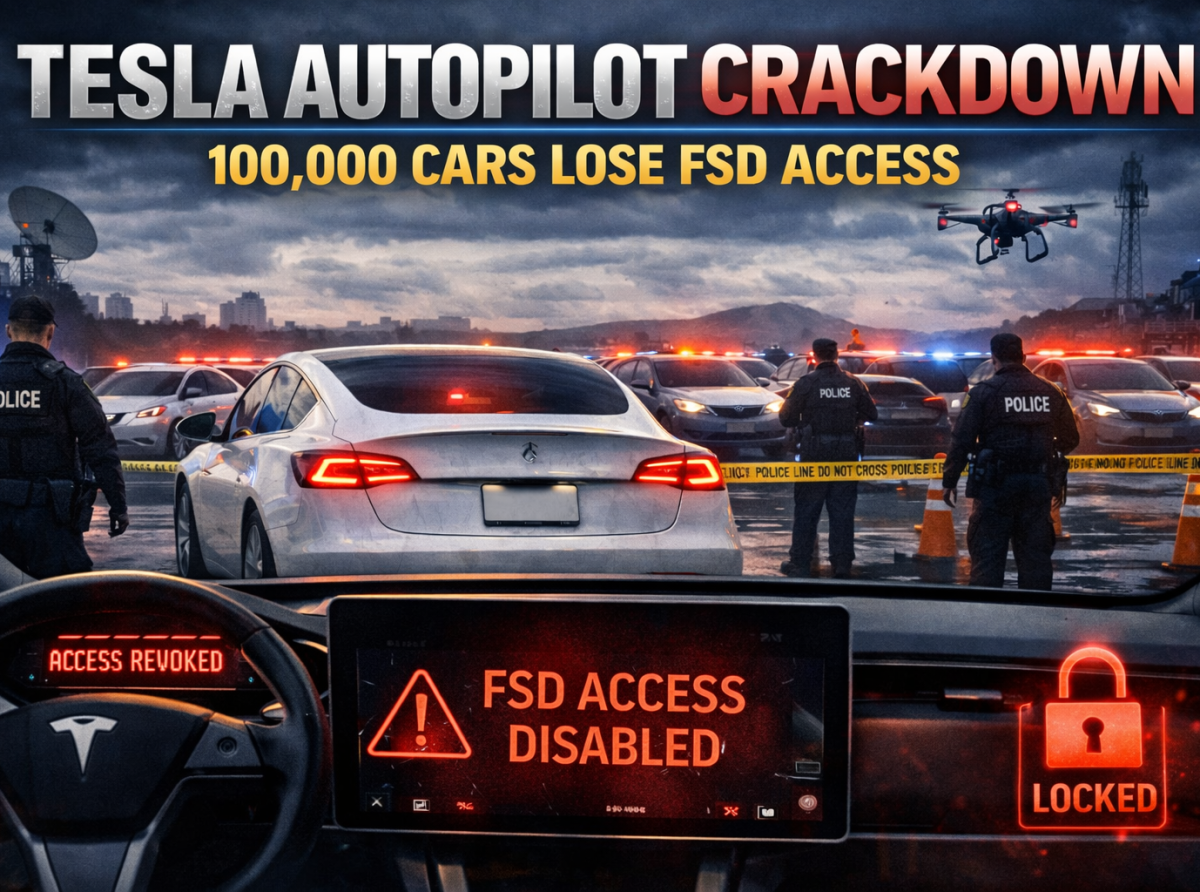
Tesla has remotely disabled Full Self-Driving (FSD) in ~100,000 vehicles after detecting unauthorized hardware used to bypass regional restrictions, highlighting rising regulatory pressure and new risks for investors in autonomous driving technologies.
The latest move by Tesla marks one of the largest enforcement actions in the automotive software space. The company identified widespread use of third-party modules that unlock restricted Autopilot features without subscription or regional approval. The response was immediate: remote deactivation, warning alerts, and in some cases, broader service limitations.
This is not just a technical story—it is a signal for financial markets. Software-defined vehicles are now part of the global digital economy, where licensing, compliance, and cybersecurity directly affect valuation, revenue models, and investor sentiment.
This is not just a technical story—it is a signal for financial markets. Software-defined vehicles are now part of the global digital economy, where licensing, compliance, and cybersecurity directly affect valuation, revenue models, and investor sentiment.
Tesla Autopilot Crackdown: 100,000 Cars Lose FSD Access
Why did Tesla disable FSD in 100,000 cars?
The issue centers on unauthorized hardware modifications. Owners installed external modules connected to the vehicle’s internal network, enabling access to features such as automatic parking and vehicle summon—functions normally restricted by geography and regulation.Structured data snapshot:
Affected vehicles: ~100,000 (as of March 2026, Tesla internal data, China focus)
Illegal module cost: €500 (EU) to $700–$2,000 (Asia)
Official FSD subscription: $99/month (global pricing, Tesla, 2026)
These modifications violate Tesla’s terms of service and introduce cybersecurity vulnerabilities. In regions like South Korea, regulators have already indicated potential legal consequences for using modified autonomous systems.
The crackdown initially focused on China but extended globally, including Europe, Japan, and the UK. This suggests a coordinated compliance strategy rather than a localized response.
The implications go beyond Tesla. The incident highlights a structural tension in the autonomous driving sector: innovation versus regulation.
In the United States, partial autonomy systems are more widely permitted, while in the EU, strict safety and data laws limit deployment. According to the European Commission (EU, March 2026), approval frameworks for AI-driven driving systems remain fragmented across member states.
Key market insight:
Autonomous tech adoption rate (EU): ~18% limited-function vehicles (Eurostat, 2026)
Full autonomy approval: still restricted in most regions outside the US
For investors, this creates asymmetry. Companies generate revenue globally, but product functionality—and therefore value—varies by jurisdiction.
Tesla’s business model shift: subscription over ownership
Tesla’s decision to discontinue lifetime FSD purchases (effective February 14, 2026) is critical. The shift to subscription aligns with broader SaaS (Software-as-a-Service) trends.From an investment perspective:
Recurring revenue increases valuation stability
Piracy or bypass risks directly impact margins
Enforcement actions become part of revenue protection
The crackdown can be interpreted as a defense of recurring revenue streams. If unauthorized access spreads, it undermines the subscription model.
Reports indicate that once a violation is detected, Tesla disables FSD remotely. Drivers receive an on-screen notification, and features stop functioning immediately.
In some cases, additional restrictions apply:
Loss of connected services
Reduced software update eligibility
No refunds for previously activated features
This creates a new risk category for consumers: software compliance risk, similar to account bans in digital platforms.
Technology update: Tesla improves AI performance
Simultaneously, Tesla is rolling out version 14.3 of its software. According to internal release notes (March 2026), improvements include:Reaction speed: +20% faster processing
Enhanced performance in low visibility conditions
Reduced failure rates in edge scenarios
This dual approach—strict enforcement + improved technology—suggests Tesla is tightening control while advancing capability.
Geographic fragmentation remains a core challenge.
United States: more permissive testing environment
European Union: strict safety and GDPR compliance
China: rapid adoption but strong state oversight
For forex and equity traders, this creates region-specific volatility. Tesla’s stock sensitivity increasingly correlates with regulatory headlines, not just product launches.
From a market perspective, three factors stand out:
Regulatory approvals for full autonomy in the EU and Asia
Adoption rates of subscription-based vehicle features
Cybersecurity incidents affecting automotive software
The autonomous vehicle sector is transitioning from hardware innovation to software governance. That shift changes valuation models and risk assessment frameworks.
Tesla’s crackdown is more than a compliance move—it reflects a deeper shift in the automotive industry. Vehicles are no longer just machines; they are regulated software platforms. For investors and traders, this introduces new variables: legal risk, subscription economics, and cybersecurity exposure. The companies that manage these factors effectively will define the next phase of the auto-tech market.
Written by Ethan Blake
Independent researcher, fintech consultant, and market analyst.
April 13, 2026
Join us. Our Telegram: @forexturnkey
All to the point, no ads. A channel that doesn't tire you out, but pumps you up.
Independent researcher, fintech consultant, and market analyst.
April 13, 2026
Join us. Our Telegram: @forexturnkey
All to the point, no ads. A channel that doesn't tire you out, but pumps you up.





Report
My comments