




Chart Aesthetics in Trading: How Clean Charts Improve Profitability
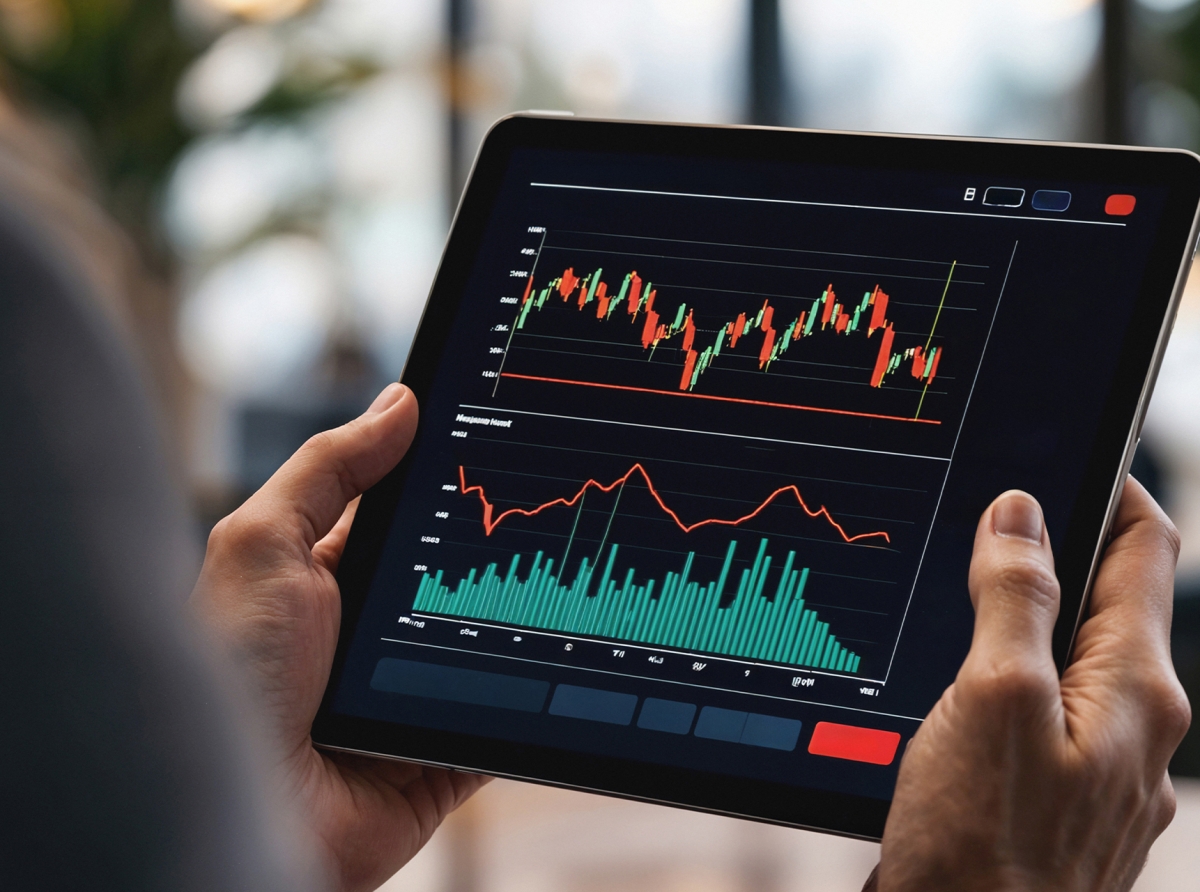
Chart Aesthetics in Trading: How Clean Charts Improve Profitability
Chart aesthetics in trading is not about visual preference—it directly affects decision quality and trade outcomes. In April 2026, traders operating with reduced indicator load showed lower reaction latency and fewer conflicting signals during EUR/USD consolidation phases (realized volatility ~6.5%). Clean charts reduce cognitive overload, allowing faster pattern recognition and more consistent execution. In practice, minimalism in chart design improves signal clarity, lowers emotional noise and increases the probability of disciplined trades—especially in low-volatility environments where overanalysis leads to errors.
Why the brain trades better on clean charts
A trading chart is an interface between data and perception. When overloaded with indicators, colors and signals, it forces the brain to process competing inputs simultaneously. This increases hesitation and inconsistency.Minimal charts do the opposite. They compress information into structure: price levels, trend lines, liquidity zones. The brain recognizes these patterns faster because they align with how visual processing works—contrast, simplicity and repetition.
From a trading desk: during a sideways EUR/USD phase (April 2026), a trader using five indicators delayed entries waiting for confirmation, while another relying on price structure entered earlier with tighter risk. The difference was not strategy, but clarity of perception.
Minimalism is often described as a style choice, but in trading it functions as a form of risk control. Every additional indicator introduces a potential conflict. When signals diverge, traders hesitate or override their own rules.
A clean chart reduces the number of decision variables. This leads to:
Faster execution
More consistent entries
Lower emotional interference
Analytical insight: in practice, many losing trades are not caused by wrong analysis, but by delayed or conflicted execution. Chart simplicity directly addresses this issue.
Micro-case: a swing trader removed oscillators and relied only on price action and key levels. Over several weeks, trade frequency decreased, but win rate improved because entries were no longer filtered through conflicting signals.
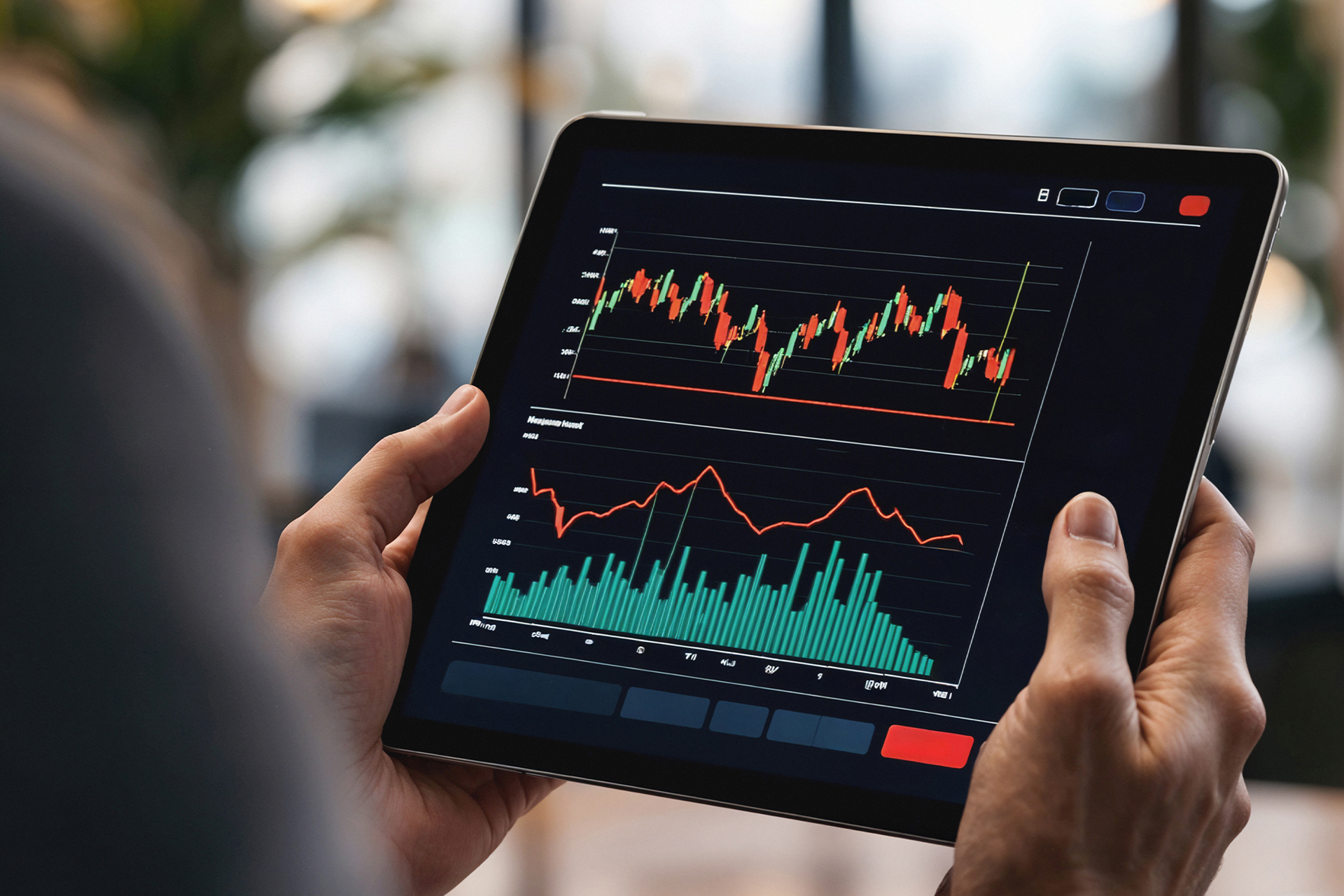
Chart Aesthetics in Trading: How Clean Charts Improve Profitability
The “aesthetic effect”: why beauty influences decisions
There is a psychological component often overlooked: people trust what looks clear and coherent. A visually balanced chart creates a sense of order, which translates into confidence.This does not mean that a “beautiful” chart predicts the market. It means that the trader is more likely to follow a plan when the structure is visually understandable.
In behavioral terms, this reduces cognitive dissonance. When the chart is chaotic, the mind searches for confirmation. When it is structured, the decision path becomes obvious.
From experience: traders who standardize their chart layout—same colors, same structure, same levels—reduce variability in their decision-making process.
Contrary to popular belief, many professional traders use remarkably simple charts. Their “aesthetic” is built around clarity, not complexity.
A typical professional chart includes:
Clean price action (candlesticks or line chart)
Key support and resistance levels
Trend structure (higher highs/lows or lower highs/lows)
Occasionally one contextual indicator (e.g. moving average)
The result often resembles a “picture” rather than a dashboard. The chart tells a story: accumulation, breakout, retracement.
Micro-story: a prop desk review session showed that the most profitable trades were taken from charts with the least visual clutter. The setups were obvious in hindsight because they were obvious in real time.
Clean charts and low-volatility markets
The advantage of chart minimalism becomes even more visible in low-volatility environments. When price moves slowly, noise dominates. Indicators tend to produce false signals.In April 2026, with compressed volatility in major pairs, traders relying on indicator-heavy setups faced frequent whipsaws. Those focusing on structure—ranges, liquidity zones—navigated the same market with fewer trades but higher precision.
This aligns with a broader principle: when the market is quiet, clarity matters more than activity.
Trading performance is tightly linked to emotional control. Visual complexity increases stress because it creates ambiguity.
A clean chart acts as a stabilizer. It reduces the number of interpretations and reinforces rule-based behavior.
From a psychological perspective, this creates a feedback loop:
Clear chart → clear decision
Clear decision → consistent execution
Consistent execution → improved results
Analytical observation: many traders attempt to fix performance by adding tools, while the actual improvement comes from removing unnecessary elements.
The paradox: less information, better decisions
It may seem counterintuitive that less information leads to better outcomes. In trading, this is often the case because relevance matters more than quantity.Price already contains aggregated market information. Additional indicators are derivatives of that same data. Overloading the chart does not add new information—it reframes existing data in multiple ways.
From a market perspective: during key macro events (e.g. Federal Reserve commentary, April 2026), price reacts instantly, while indicators lag. A clean chart allows direct interpretation of that reaction.
As trading platforms become more advanced and data availability increases, the temptation to add complexity grows. However, the edge is shifting toward simplification.
Traders who develop a consistent visual framework gain:
Faster recognition of setups
Lower decision fatigue
More stable performance over time
Forward view: chart aesthetics will increasingly be recognized not as a preference, but as a component of trading methodology.
A clean chart does not predict the market—but it changes how the trader interacts with it. By reducing noise, aligning perception with structure and reinforcing discipline, chart aesthetics increase the probability of executing profitable trades. In practice, this turns simplicity into an operational advantage rather than a stylistic choice.
By Miles Harrington
April 24, 2026
Join us. Our Telegram: @forexturnkey
All to the point, no ads. A channel that doesn't tire you out, but pumps you up.
April 24, 2026
Join us. Our Telegram: @forexturnkey
All to the point, no ads. A channel that doesn't tire you out, but pumps you up.





Report
My comments