




Forex as a School of Decision-Making: How Trading Teaches Fast and Effective Choices

Forex as a School of Decision-Making: How Trading Teaches Fast and Effective Choices
Forex trading trains decision-making skills by forcing traders to analyze large volumes of data and act quickly under uncertainty. Through constant exposure to market volatility, traders develop structured thinking, risk assessment abilities, and disciplined execution—skills that are transferable to business strategy and everyday problem solving.
Financial markets are often viewed primarily as a place to generate profit. However, for many participants the forex market becomes something more than a trading environment. It functions as a training ground where individuals develop the ability to analyze complex information quickly and make decisions under conditions of uncertainty.
The constant flow of economic data, price movements, and geopolitical developments forces traders to react in real time. Unlike many other professions where decisions can be postponed, trading requires immediate evaluation of available information and a clear choice of action.
The constant flow of economic data, price movements, and geopolitical developments forces traders to react in real time. Unlike many other professions where decisions can be postponed, trading requires immediate evaluation of available information and a clear choice of action.
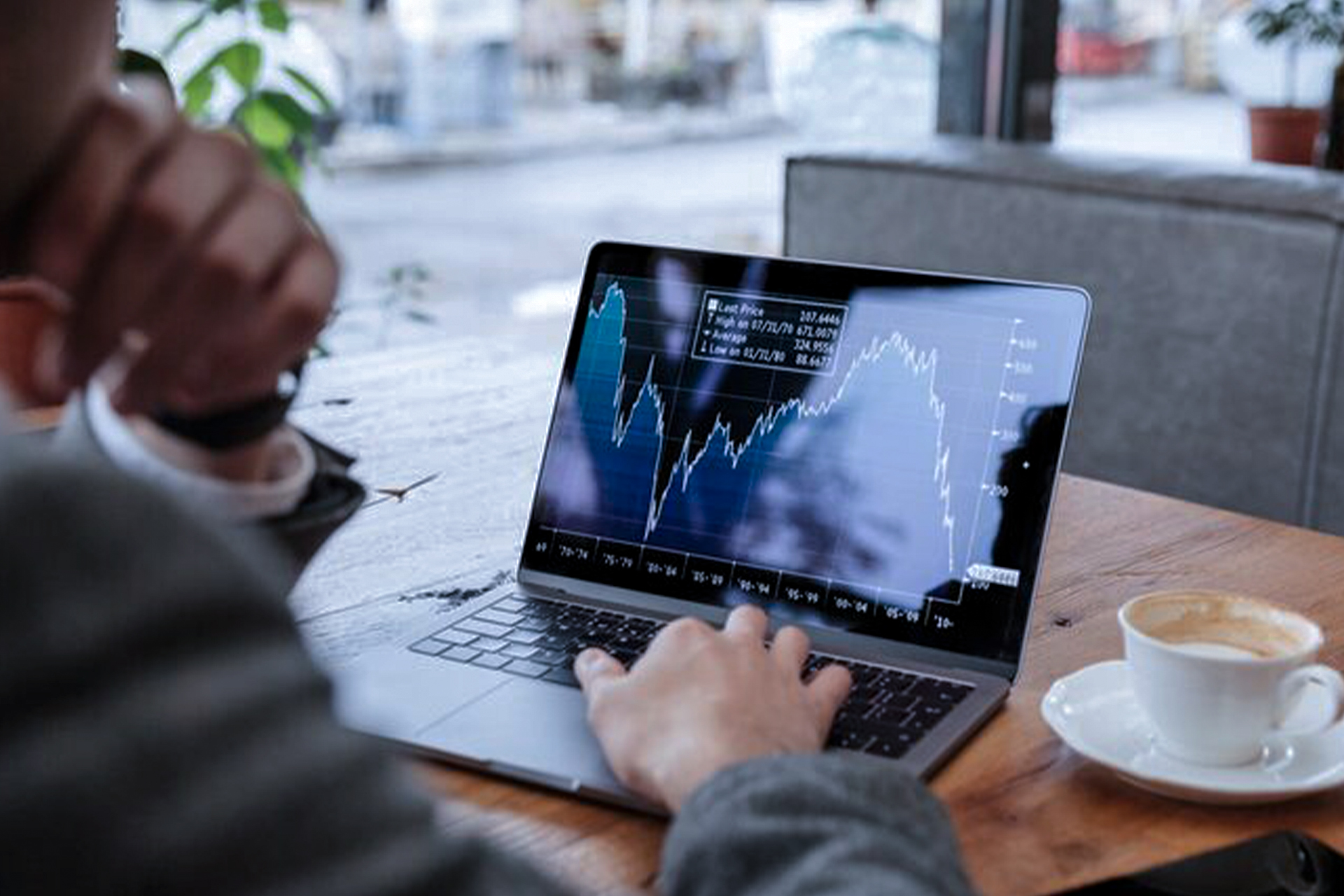
Forex as a School of Decision-Making: How Trading Teaches Fast and Effective Choices
The Information Environment of Financial Markets
The forex market is one of the most information-dense environments in modern finance. Traders monitor macroeconomic indicators, central bank announcements, political developments, and technical signals simultaneously.Currency prices respond rapidly to this flow of information. A single economic report or statement from a policymaker can change the direction of a market within minutes. Traders must therefore interpret incoming data quickly and evaluate whether it supports or contradicts their existing trading strategy.
This constant exposure to dynamic information trains the mind to filter noise and identify the signals that truly influence market movements.
One of the defining characteristics of trading is the need to combine analysis with speed. In business or academic settings, decisions may involve long deliberation processes. In financial markets, hesitation can result in missed opportunities or increased losses.
Traders learn to build structured analytical frameworks that allow them to process information efficiently. Technical analysis, macroeconomic evaluation, and statistical probability models help them form clear decision rules.
These frameworks reduce emotional reactions and replace them with systematic reasoning. Over time, traders develop the ability to recognize patterns and anticipate market behavior with increasing speed.
Managing Uncertainty and Risk
Decision-making in trading rarely involves certainty. Markets are influenced by thousands of variables, many of which cannot be predicted accurately.As a result, traders learn to think in terms of probability rather than absolute outcomes. Instead of trying to guarantee success, they evaluate potential scenarios and manage risk accordingly.
This mindset is particularly valuable outside the trading environment. Entrepreneurs, managers, and investors often face similar uncertainty when making strategic decisions. The ability to weigh risks and probabilities becomes a critical leadership skill.
Another important lesson from trading is emotional discipline. Financial markets can produce rapid gains and losses, creating psychological pressure that may influence decision-making.
Successful traders learn to control impulsive reactions and follow structured trading plans. This process requires patience, self-awareness, and the ability to separate emotions from analytical judgment.
Over time, traders develop mental resilience. They become accustomed to evaluating outcomes objectively rather than reacting emotionally to short-term fluctuations.
The longer individuals participate in the forex market, the more they begin to recognize recurring patterns in price behavior and market psychology.
These patterns may involve technical formations, reactions to economic news, or investor sentiment cycles. Recognizing such structures allows traders to anticipate potential scenarios and prepare responses in advance.
This skill translates well into strategic planning. In business environments, leaders often rely on pattern recognition when analyzing market trends, consumer behavior, or competitive dynamics.
Successful traders learn to control impulsive reactions and follow structured trading plans. This process requires patience, self-awareness, and the ability to separate emotions from analytical judgment.
Over time, traders develop mental resilience. They become accustomed to evaluating outcomes objectively rather than reacting emotionally to short-term fluctuations.
The longer individuals participate in the forex market, the more they begin to recognize recurring patterns in price behavior and market psychology.
These patterns may involve technical formations, reactions to economic news, or investor sentiment cycles. Recognizing such structures allows traders to anticipate potential scenarios and prepare responses in advance.
This skill translates well into strategic planning. In business environments, leaders often rely on pattern recognition when analyzing market trends, consumer behavior, or competitive dynamics.
Transferable Skills Beyond Trading
The skills developed through forex trading extend far beyond financial markets. Many traders report that their experience improves decision-making in professional and personal contexts.The ability to process information quickly, evaluate risks, and execute decisions with discipline is valuable in fields such as entrepreneurship, finance, project management, and strategic consulting.
Even in everyday life, these abilities can enhance problem-solving and improve the quality of personal decisions.
While trading is often associated with financial returns, its educational value is frequently overlooked. The forex market exposes participants to complex decision-making scenarios on a daily basis.
Each trading session becomes an exercise in analysis, risk assessment, and strategic execution. Through repeated exposure to this environment, traders gradually refine their thinking processes and develop stronger cognitive discipline.
In this sense, forex trading functions not only as a financial activity but also as a practical training system for decision-making in uncertain and rapidly changing environments.
By Jake Sullivan
March 10, 2026
Join us. Our Telegram: @forexturnkey
All to the point, no ads. A channel that doesn't tire you out, but pumps you up.
March 10, 2026
Join us. Our Telegram: @forexturnkey
All to the point, no ads. A channel that doesn't tire you out, but pumps you up.





Report
My comments