




Forex University: How Self-Education Gives Traders an MBA-Level Understanding of Global Markets
Forex University: How Self-Education Gives Traders an MBA-Level Understanding of Global Markets
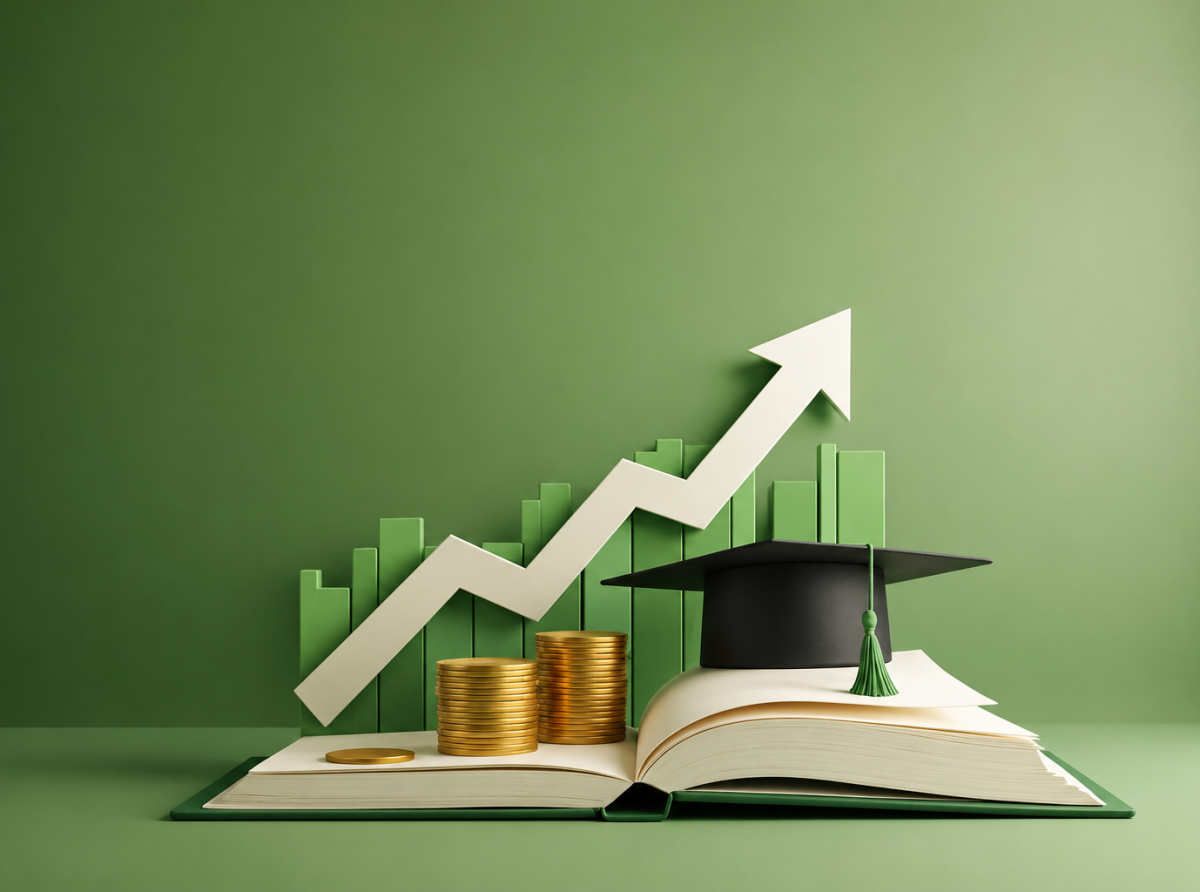
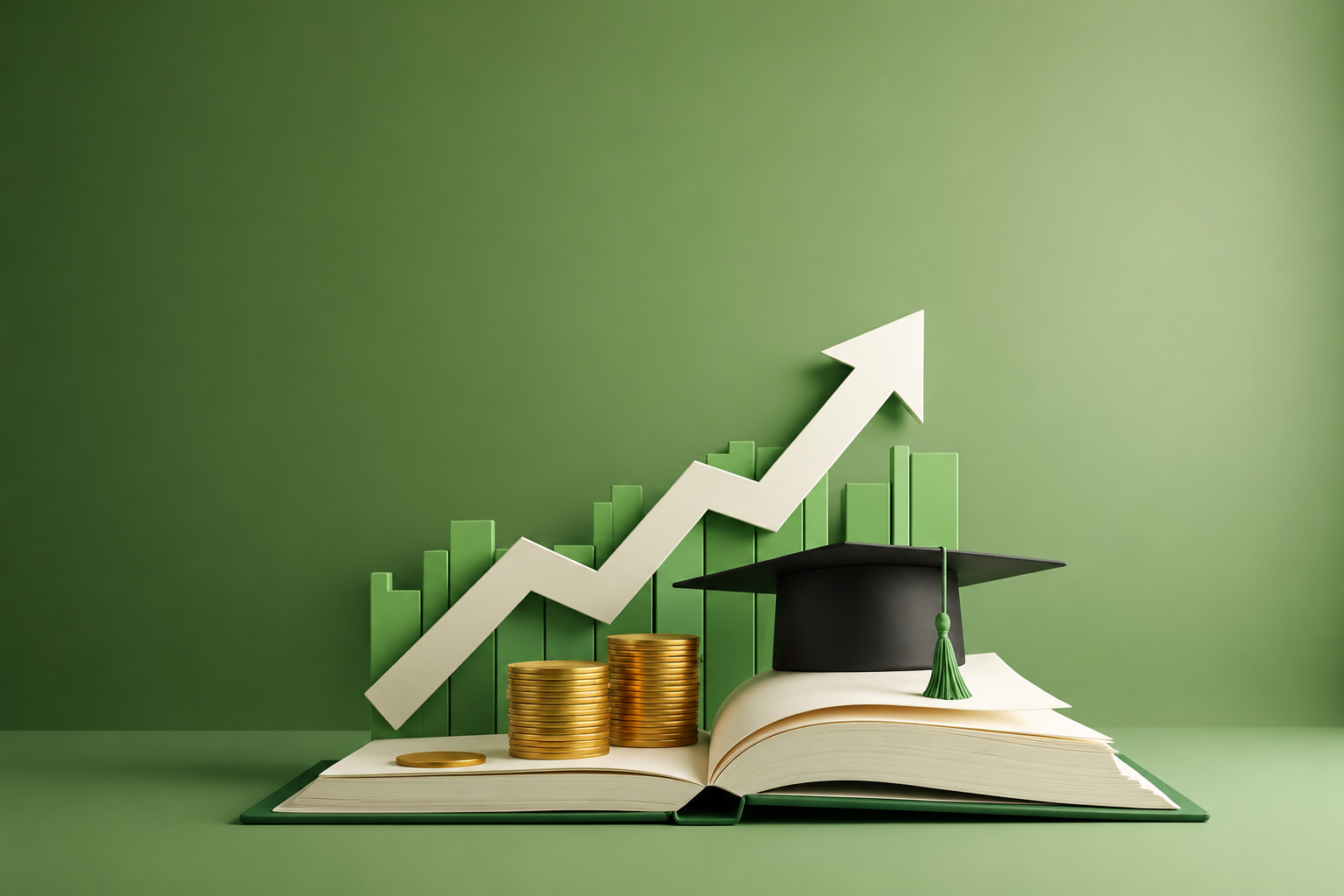
Forex trading has evolved into one of the most practical forms of financial self-education. Traders who consistently study macroeconomics, central bank policy, risk management, market psychology, data analysis, and international capital flows often develop skills comparable to those taught in MBA programs. Unlike traditional academic environments, the forex market provides immediate real-world feedback, forcing participants to apply theoretical knowledge under constantly changing global conditions.
The World's Most Demanding Classroom Has No Campus
Universities award degrees. Markets deliver consequences.That distinction explains why thousands of professionals, entrepreneurs, analysts, engineers, and investors eventually discover that the foreign exchange market functions as an unconventional educational institution. The curriculum is not designed by professors. It is written daily by central banks, governments, multinational corporations, financial institutions, and global investors.
Every trading session becomes a lesson in economics, decision-making, statistics, behavioral finance, and risk control.
The forex market processes more capital than any other financial market in the world. As a result, traders are constantly exposed to information that shapes the global economy itself. Interest-rate decisions, inflation reports, employment data, geopolitical developments, trade balances, and monetary policy all become essential study material rather than abstract academic concepts.
The outcome is a learning environment that rewards intellectual curiosity and punishes superficial understanding.
Forex University: How Self-Education Gives Traders an MBA-Level Understanding of Global Markets
Why Forex Education Extends Far Beyond Trading
Many newcomers initially approach forex as a way to speculate on currency movements. Experienced traders quickly realize that profitable decision-making requires understanding a much broader ecosystem.A trader studying the U.S. dollar inevitably learns about the Federal Reserve. Understanding the Federal Reserve requires understanding inflation, labor markets, economic growth, debt markets, and monetary transmission mechanisms.
The same process occurs when analyzing the euro, British pound, Japanese yen, Swiss franc, or emerging-market currencies.
Over time, forex traders build knowledge across multiple disciplines simultaneously:
Macroeconomics
International finance
Monetary policy
Risk management
Statistical analysis
Market psychology
Geopolitics
Business strategy
This interdisciplinary exposure resembles the structure of many MBA programs, where students are expected to understand how different economic forces interact rather than studying isolated subjects.
Central Banks Become Daily Professors
Few educational programs force students to follow central-bank communication as closely as forex trading does.Professional currency traders routinely analyze statements from entities such as the Federal Reserve, European Central Bank, Bank of England, and Bank of Japan.
Each policy announcement becomes a case study in economic management.
Why are interest rates rising?
Why is inflation accelerating?
Why are policymakers concerned about employment or financial stability?
How do bond markets react?
How does capital flow between economies?
These questions are not theoretical exercises. They directly influence market prices and trading opportunities.
A trader who follows these developments for several years often acquires a practical understanding of monetary economics that many business graduates only encounter in textbooks.
Risk Management: The Subject Most Schools Rarely Teach
Traditional education frequently emphasizes opportunity.Markets emphasize survival. This difference may be the most valuable lesson forex traders learn.
Successful traders understand that protecting capital is more important than chasing profits. Position sizing, drawdown control, probability analysis, portfolio exposure, and scenario planning become daily responsibilities.
In many professions, mistakes can remain hidden for months or years. In trading, mistakes are often visible immediately. That feedback loop accelerates learning.
The process teaches discipline, accountability, and decision-making under uncertainty— skills highly valued in business leadership, entrepreneurship, investment management, and corporate strategy.
Market Psychology as a Competitive Advantage
An MBA program may include behavioral finance as an elective subject.Forex traders experience it every day. Fear, greed, overconfidence, loss aversion, confirmation bias, and emotional decision-making constantly influence market behavior.
Learning to recognize these psychological patterns in oneself becomes a crucial component of long-term success.
Many traders eventually discover that their greatest challenge is not forecasting economic events but controlling their reactions to uncertainty.
This creates an unusual educational benefit. Market participants are forced to study both economics and human behavior simultaneously. Understanding how people respond to risk becomes just as important as understanding how currencies move.
Global Awareness Becomes a Necessity
Most professions allow individuals to specialize within a specific industry or region.Forex trading encourages the opposite approach.
A currency trader cannot ignore developments in Asia, Europe, North America, the Middle East, or emerging markets. Events occurring thousands of kilometers away can influence exchange rates within minutes.
A change in energy prices may affect inflation expectations.
A political election may alter fiscal policy.
A trade agreement may shift capital flows.
A central-bank decision may reprice entire asset classes.
As a result, forex traders often develop a broader international perspective than many professionals working in traditional corporate environments.
This global awareness represents one of the most underestimated educational outcomes of long-term market participation.
The Difference Between Information and Knowledge
The internet provides unlimited financial information. Forex trading teaches how to evaluate it. This distinction is critical.Modern traders face a constant stream of economic reports, analyst opinions, financial news, and social-media commentary. Success depends not on consuming more information but on identifying what truly matters.
The ability to filter noise, prioritize data, and make decisions under uncertainty mirrors challenges faced by executives, investors, and policymakers.
In that sense, forex education is less about learning facts and more about developing judgment.
And judgment remains one of the most valuable professional skills in any industry.
Why the Forex Market Creates Lifelong Learners
Unlike formal education, market education never ends.Economic conditions evolve. Technology changes. Monetary regimes shift.
New geopolitical realities emerge. What worked five years ago may no longer work today.
This continuous adaptation encourages intellectual flexibility and lifelong learning. Traders who remain successful over decades typically view education not as a phase of life but as an ongoing process.
That mindset closely resembles the habits of elite business leaders, investors, and innovators.
Forex trading is often viewed solely through the lens of speculation. That perspective overlooks its broader educational value.
For committed participants, the currency market becomes a practical university of economics, finance, psychology, risk management, and global affairs. While it does not provide a diploma, it offers something arguably more valuable: the ability to understand how the world's financial system functions in real time.
The most successful traders are rarely those who simply learn how to place orders. They are the individuals who transform themselves into students of markets, economies, and human behavior.
In an increasingly interconnected world, that education can be as valuable as any degree.
For committed participants, the currency market becomes a practical university of economics, finance, psychology, risk management, and global affairs. While it does not provide a diploma, it offers something arguably more valuable: the ability to understand how the world's financial system functions in real time.
The most successful traders are rarely those who simply learn how to place orders. They are the individuals who transform themselves into students of markets, economies, and human behavior.
In an increasingly interconnected world, that education can be as valuable as any degree.
By Claire Whitmore
July 03, 2026
Join us. Our Telegram: @forexturnkey
All to the point, no ads. A channel that doesn't tire you out, but pumps you up.
July 03, 2026
Join us. Our Telegram: @forexturnkey
All to the point, no ads. A channel that doesn't tire you out, but pumps you up.



Report
My comments