




Oil Surges Above $110 Amid Strait of Hormuz Crisis and Escalating Iran Conflict
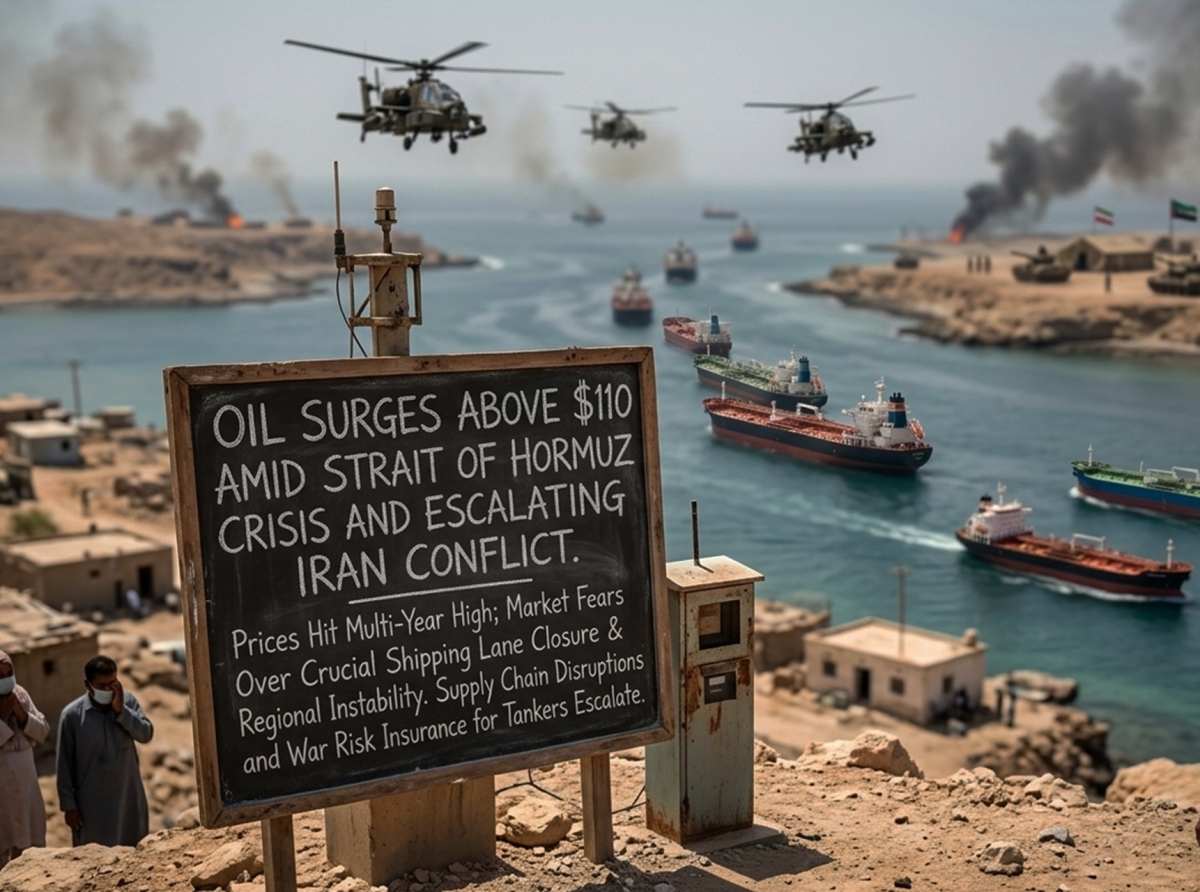
Oil Surges Above $110 Amid Strait of Hormuz Crisis and Escalating Iran Conflict
Oil prices surged above $110 per barrel after Middle Eastern producers cut output amid the closure of the Strait of Hormuz during the Iran conflict. With tankers avoiding the strategic waterway and storage facilities filling up, global supply disruptions triggered the sharpest oil rally in years, raising concerns about energy market stability.
Global oil markets experienced a dramatic rally after crude prices surged above $110 per barrel, driven by supply disruptions linked to the ongoing conflict with Iran and the closure of one of the world’s most critical shipping routes — the Strait of Hormuz.
Major oil producers in the Middle East have begun cutting production as exports slow and storage facilities fill up. At the same time, geopolitical uncertainty continues to intensify after the United States launched military operations against Iran, triggering fears of prolonged instability in global energy markets.
Major oil producers in the Middle East have begun cutting production as exports slow and storage facilities fill up. At the same time, geopolitical uncertainty continues to intensify after the United States launched military operations against Iran, triggering fears of prolonged instability in global energy markets.
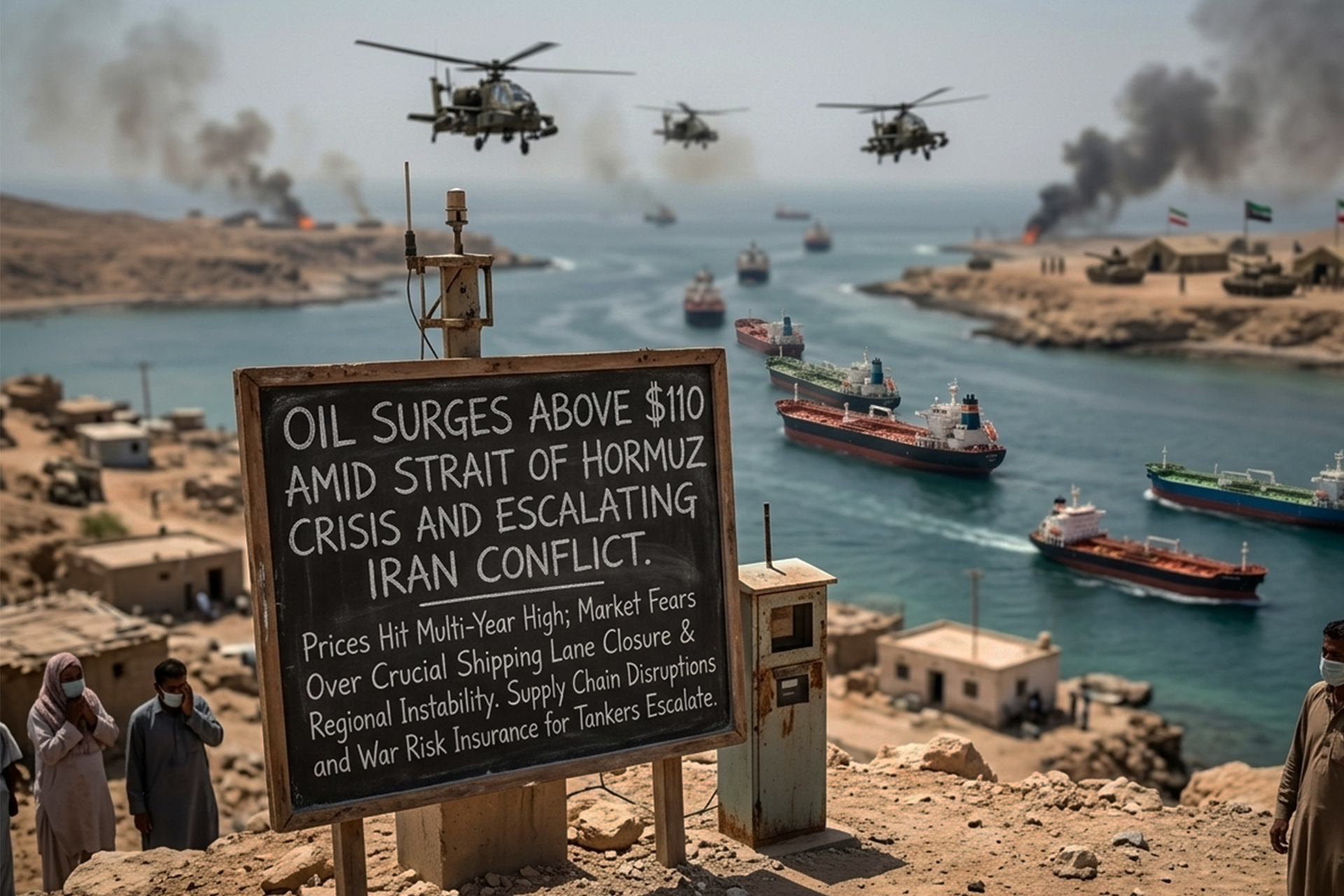
Oil Surges Above $110 Amid Strait of Hormuz Crisis and Escalating Iran Conflict
Sharp Oil Price Rally
Crude markets reacted strongly to the developing crisis. The U.S. benchmark West Texas Intermediate jumped 26.5%, rising about $24 to $114.9 per barrel. Meanwhile, the global benchmark Brent Crude climbed 23%, adding $21.56 to reach approximately $114.25 per barrel.The surge followed an already historic rally during the previous week, when U.S. crude prices recorded their largest weekly increase since futures trading began in 1983.
Oil last traded above $100 per barrel during the global energy shock that followed the Russian invasion of Ukraine. The current spike reflects similar concerns about supply security, although this time the disruption centers on the Persian Gulf.
Trump Calls Price Surge “A Small Price to Pay”
Amid the rapid rise in energy prices, Donald Trump commented on the situation via social media, describing the increase in oil prices as a necessary consequence of military action against Iran.According to the U.S. president, a short-term surge in energy costs is a “very small price to pay” if it eliminates what he described as Iran’s nuclear threat. His remarks came shortly after crude prices broke through the $100 level at the opening of Sunday evening trading.
The statement highlighted the political dimension of the crisis, as global markets attempt to assess the duration and impact of the conflict.
Several major oil-producing states in the Persian Gulf have already reduced production as export routes remain blocked.
Kuwait announced precautionary cuts to both oil production and refinery output after authorities warned of Iranian threats to tanker traffic in the Strait of Hormuz. The country’s state oil company indicated that the move was intended to ensure operational safety while shipping routes remain uncertain.
Production disruptions are even more severe in Iraq, the second-largest producer within OPEC. Output from its three main southern oil fields has reportedly dropped by roughly 70%, falling from around 4.3 million barrels per day to approximately 1.3 million barrels per day.
Meanwhile, United Arab Emirates authorities confirmed they are carefully managing offshore production levels as storage capacity becomes limited.
Storage Crisis in the Gulf
The reduction in output is not solely the result of security concerns. Gulf producers are also facing a growing storage crisis.With exports halted through the Strait of Hormuz, millions of barrels of oil are accumulating in regional storage facilities. Tanker operators have largely avoided the narrow shipping corridor, fearing potential attacks.
The strategic waterway normally handles about 20% of global oil consumption, making it one of the most important energy transit routes in the world.
Without access to this corridor, producers across the region are struggling to move oil to international markets, forcing them to scale back production.
Leadership Change in Iran
The geopolitical situation intensified further following reports of a major leadership change in Iran.According to multiple sources, Mojtaba Khamenei — the son of former supreme leader Ali Khamenei — has been named as the country’s new supreme leader.
The development reportedly followed the death of the elder Khamenei during the early stages of the conflict involving the United States and Israel. The leadership transition adds another layer of uncertainty to an already volatile regional situation.
Despite rising prices, officials in Washington suggest that the disruption to oil shipments could eventually be temporary.
U.S. Energy Secretary Chris Wright stated that tanker traffic through the Strait of Hormuz may resume once Iran’s ability to threaten shipping routes has been neutralized.
However, markets remain skeptical. The continued closure of the Strait and the reduction of production among major exporters could tighten global supply significantly if the crisis drags on.
For energy traders and investors, the situation illustrates how quickly geopolitical shocks can reshape commodity markets. With one-fifth of the world’s oil supply moving through a single strategic chokepoint, the stability of global energy prices remains closely tied to developments in the Persian Gulf.
U.S. Energy Secretary Chris Wright stated that tanker traffic through the Strait of Hormuz may resume once Iran’s ability to threaten shipping routes has been neutralized.
However, markets remain skeptical. The continued closure of the Strait and the reduction of production among major exporters could tighten global supply significantly if the crisis drags on.
For energy traders and investors, the situation illustrates how quickly geopolitical shocks can reshape commodity markets. With one-fifth of the world’s oil supply moving through a single strategic chokepoint, the stability of global energy prices remains closely tied to developments in the Persian Gulf.
Written by Ethan Blake
Independent researcher, fintech consultant, and market analyst.
March 09, 2026
Join us. Our Telegram: @forexturnkey
All to the point, no ads. A channel that doesn't tire you out, but pumps you up.
Independent researcher, fintech consultant, and market analyst.
March 09, 2026
Join us. Our Telegram: @forexturnkey
All to the point, no ads. A channel that doesn't tire you out, but pumps you up.





Report
My comments