




Trump Threatens EU With Higher Tariffs as July 4 Trade Deadline Approaches
Trump Threatens EU With Higher Tariffs as July 4 Trade Deadline Approaches
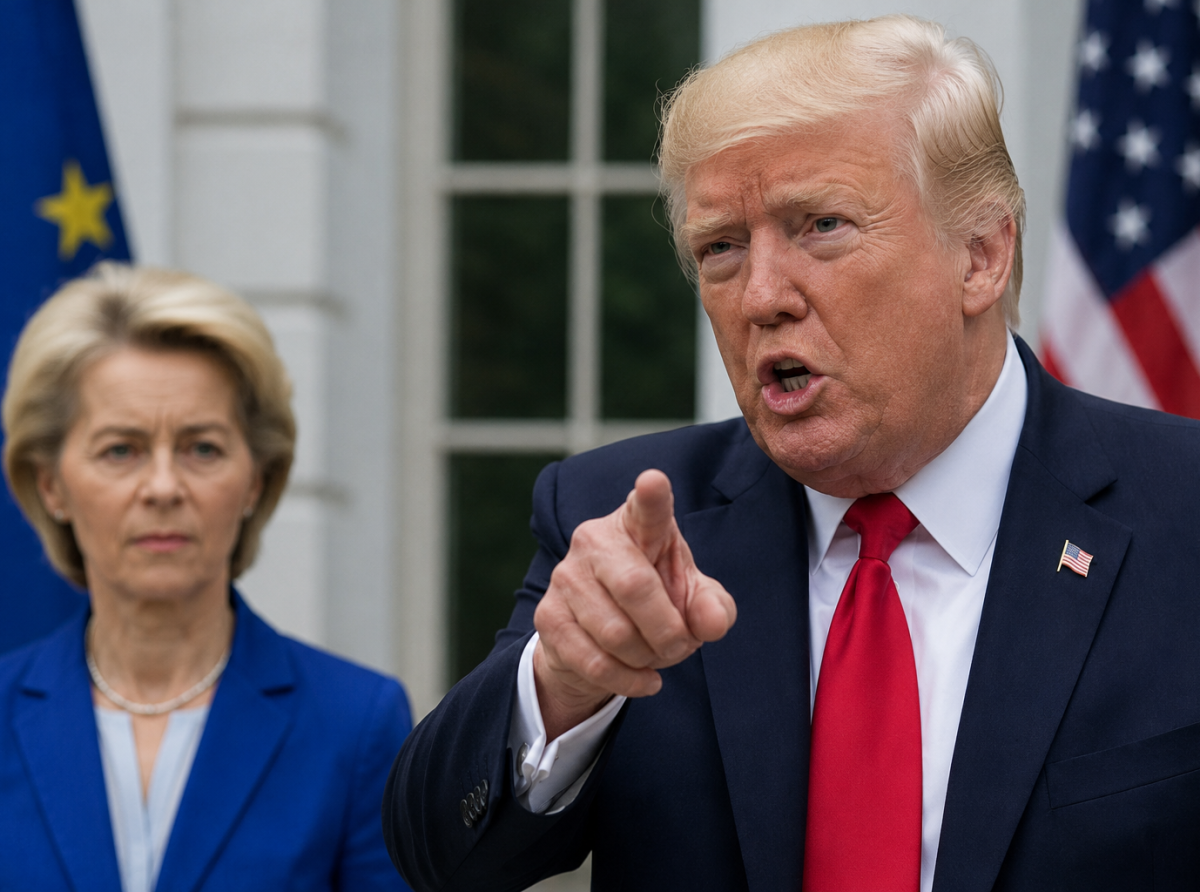
As of April 2026, trade tensions between the United States and the European Union have intensified after Donald Trump warned that tariffs could rise to “significantly higher levels” if the EU fails to ratify a trade agreement before July 4.
The announcement reintroduces uncertainty into global trade flows at a time when markets are already navigating geopolitical pressure, inflation concerns, and slowing industrial growth.
The announcement reintroduces uncertainty into global trade flows at a time when markets are already navigating geopolitical pressure, inflation concerns, and slowing industrial growth.
Tariffs return to the center of market risk
Trump’s latest statement signals that tariffs remain a core instrument of economic leverage in U.S. policy. By linking the deadline to the symbolic date of America’s 250th anniversary, the White House is increasing political pressure on Brussels while framing the negotiations as a test of commitment from the EU.The immediate concern for markets is not simply whether tariffs rise, but how uncertainty affects investment decisions and supply chains before any formal policy change occurs.
From a trader’s desk: markets tend to react to the probability of disruption long before tariffs actually take effect.
Automotive sector under pressure
One of the most sensitive areas remains the automotive industry. Trump previously threatened tariffs of up to 25% on cars and trucks imported from Europe, accusing the EU of failing to honor commitments made during earlier negotiations in Scotland.For European manufacturers, the U.S. remains one of the most important export destinations. Higher tariffs would directly pressure margins, pricing competitiveness, and production planning across the sector.
The risk extends beyond automakers themselves. Supply chains connected to steel, semiconductors, industrial machinery, and logistics could also face secondary effects.
Trump Threatens EU With Higher Tariffs as July 4 Trade Deadline Approaches
Markets face a familiar pattern
The current situation resembles earlier phases of global trade conflicts where headline-driven volatility dominated sentiment. Markets dislike uncertainty because it complicates capital allocation and reduces visibility for multinational corporations.European equities are especially vulnerable to renewed tariff threats because export-oriented sectors represent a significant share of major indices.
Meanwhile, currency markets may also respond if trade tensions begin affecting growth expectations on either side of the Atlantic.
The timing of Trump’s warning is particularly important because U.S. courts have recently challenged parts of the administration’s broader tariff strategy. A federal trade court ruled against some global tariff measures, following earlier Supreme Court limitations on presidential tariff authority.
This creates a more complex environment where political threats, legal challenges, and negotiations evolve simultaneously.
For markets, this means tariff policy itself becomes a source of volatility.
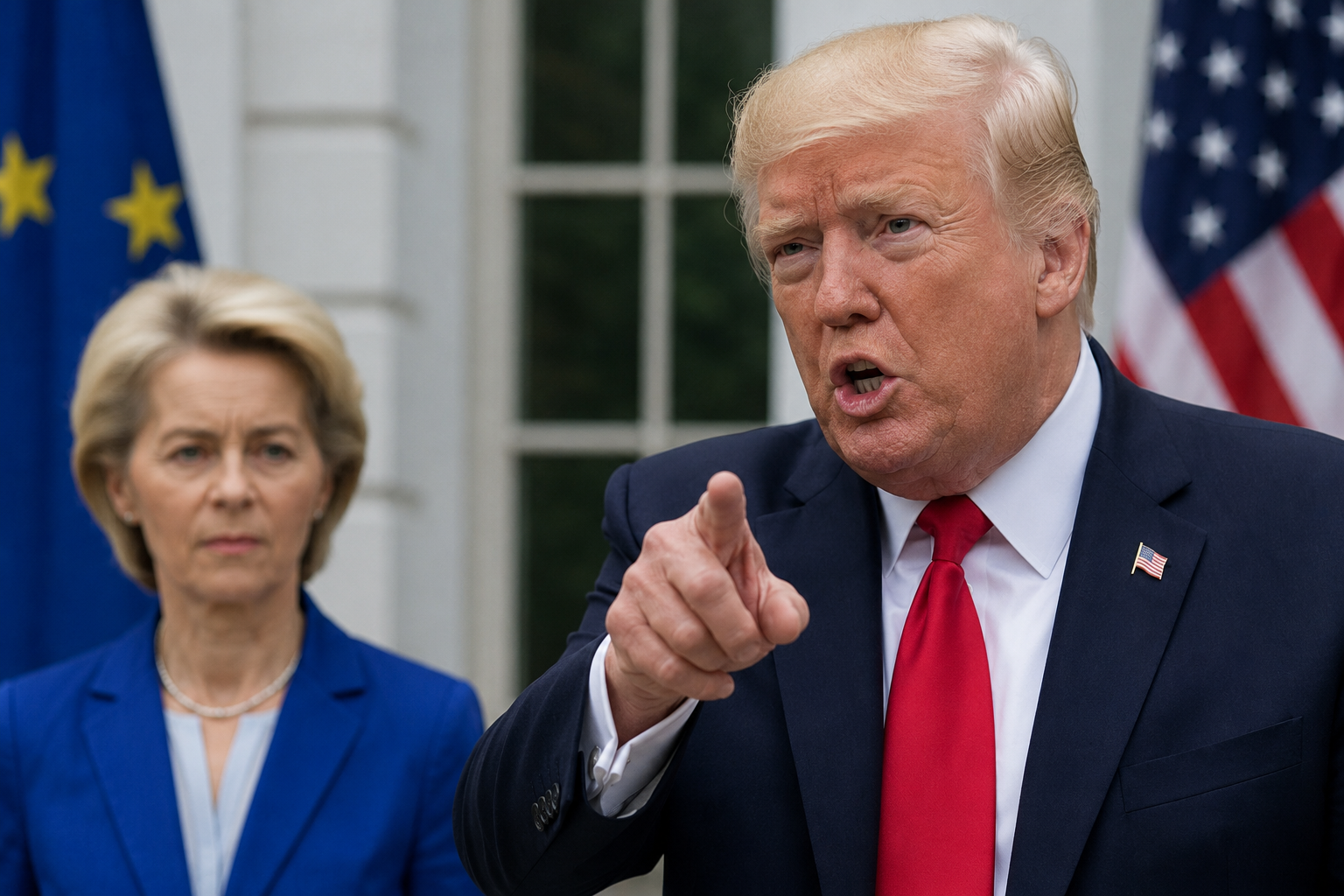
Ursula von der Leyen stated that the EU remains committed to implementing the agreement and acknowledged progress toward reducing tariffs.
However, European officials also admit that major issues remain unresolved. Trade negotiators are expected to continue discussions in May, suggesting that the current deadline functions as both a negotiation tactic and a political pressure mechanism.
Macro implications: inflation and growth
If tariffs increase significantly, the broader economic impact could extend beyond trade balances. Import costs would likely rise, adding pressure to inflation at a time when central banks are still attempting to stabilize prices.At the same time, tighter trade conditions could weaken industrial activity and slow cross-border investment flows.
This creates a difficult balance for markets: tariffs can simultaneously increase inflationary pressure while reducing growth momentum.
Analytical insight: trade policy as market weapon
The broader lesson is that trade policy has evolved into a strategic market tool rather than purely an economic mechanism. Tariffs now influence geopolitics, industrial policy, and domestic political positioning simultaneously.For investors, this means trade negotiations are no longer background noise—they are macroeconomic catalysts capable of moving currencies, commodities, and equities globally.
Trump’s renewed tariff threat against the European Union highlights how fragile global trade stability remains in 2026. Even without immediate implementation, the possibility of higher tariffs is enough to affect corporate planning, investor sentiment, and market volatility. The outcome of negotiations before July 4 may shape not only U.S.-EU trade relations, but broader confidence across global markets.
Written by Ethan Blake
Independent researcher, fintech consultant, and market analyst.
May 08, 2026
Join us. Our Telegram: @forexturnkey
All to the point, no ads. A channel that doesn't tire you out, but pumps you up.
Independent researcher, fintech consultant, and market analyst.
May 08, 2026
Join us. Our Telegram: @forexturnkey
All to the point, no ads. A channel that doesn't tire you out, but pumps you up.





Report
My comments