

Smart Contract Broker Agreement: Can Code Replace Terms?

Smart Contract Broker Agreement: Where Automation Ends and Legal Responsibility Begins
A smart contract broker agreement can automate margin calls, fee deductions and settlement. But can it replace the written agreement between a broker and a client? Not entirely. Code can execute predefined instructions, but it cannot independently resolve every question about contractual obligations, disputed transactions, applicable law or the court that should hear a claim.
The distinction matters because a broker-client relationship involves more than the movement of money. It also defines trading conditions, risk disclosures, execution procedures, complaint handling and the responsibilities of each party. A blockchain transaction may be completed automatically, while the legal consequences of that transaction remain open to interpretation.
The most practical approach is therefore a hybrid structure: written terms establish the legal relationship, while smart contracts automate clearly defined operations. This article examines what the law currently supports, where uncertainty remains and what brokers should consider before introducing automated contractual processes.
What Is a Smart Contract Broker Agreement?
A smart contract is software that automatically performs actions when predefined conditions are met. It can operate on a blockchain or another technical environment designed to execute programmed instructions.
In brokerage, this logic could support several operational processes:
- calculating and collecting predefined fees;
- checking collateral or margin requirements;
- triggering automated settlement;
- recording transaction events;
- applying predefined conditions to transfers or other account operations.
However, not every program that moves digital assets is a legally binding contract. The distinction is important.
A smart contract may simply execute a technical instruction. A smart legal contract is different: its code defines or performs obligations that form part of a legally binding agreement.
The Law Commission of England and Wales addressed this distinction in its advice to the UK Government, published on November 25, 2021. It concluded that existing law in England and Wales can support smart legal contracts without requiring statutory reform. It also recognised that different levels of automation can create different legal questions.
For brokers, the practical question is not whether a process can be automated. It is whether the legal obligations, limitations and remedies surrounding that process are sufficiently clear.
Can a Smart Contract Replace a Traditional Broker-Client Agreement?
A smart contract can perform selected contractual functions, but a broker-client agreement usually covers a much wider relationship.
A written agreement may specify:
- the financial instruments and services offered;
- leverage, margin and liquidation conditions;
- order execution and pricing arrangements;
- fees, commissions and withdrawal rules;
- risk disclosures and client responsibilities;
- complaint procedures and dispute resolution;
- governing law and the competent court or arbitration forum.
Some of these provisions can be translated into software rules. Others require interpretation, communication or human review.
For example, a program can be designed to close a position when a specified margin threshold is reached. But what happens if the underlying price feed is incorrect? How should the parties assess a disputed execution? Can a client challenge the information supplied by an external data source?
The code may have performed exactly as programmed, yet the outcome may still be disputed under the agreement.
This is why brokers should avoid presenting automated execution as a complete substitute for contractual documentation. The software can implement agreed rules, but the written terms should explain what those rules mean and how disagreements are handled.
What Does the Law Say About Smart Contract Enforceability?
There is no single global answer. Enforceability depends on the applicable legal system, the structure of the agreement, the parties involved and the financial activity being conducted.
England and Wales: Existing Contract Law Can Support Smart Legal Contracts
The Law Commission’s November 25, 2021 advice concluded that the legal framework in England and Wales is capable of recognising and supporting smart legal contracts.
The Commission considered that existing legal principles can generally apply to these arrangements in much the same way as they apply to traditional contracts. It did not conclude that every piece of executable code automatically creates a binding agreement.
The advice also identified areas requiring further attention, particularly deeds and private international law. The latter concerns questions such as which country’s law applies and which court has jurisdiction when a dispute crosses borders.
For international brokers, this limitation is significant. A contract may be signed or accepted online, executed through a distributed network and used by a client located in another country. The technical location of the code does not, by itself, settle the legal location of the agreement.
Read the Law Commission’s smart contracts project and advice.
United States: Automation Does Not Remove Operational and Regulatory Risks
On November 27, 2018, the US Commodity Futures Trading Commission’s LabCFTC published A CFTC Primer on Smart Contracts.
The document examines the technology and discusses operational, technical, cybersecurity, fraud, manipulation and governance risks. It is an educational primer, not a ruling that determines whether a particular broker agreement is enforceable.
The distinction matters. The CFTC’s jurisdiction over a specific smart contract depends on the facts and circumstances. Its primer should not be interpreted as a universal legal standard for every cryptocurrency transaction, retail broker or financial product.
For brokerage businesses, the broader lesson is that automation does not remove the need to assess the applicable regulatory framework. The product, legal entity, client type and jurisdiction all matter.
Read the CFTC announcement and access the smart contracts primer.
European Union: Tokenisation Standards Are Still Developing
On November 9, 2026, the European Central Bank, European Commission and European Securities and Markets Authority announced a call for nominations to the European Tokenisation Standards Group.
The initiative is intended to bring industry participants together to develop common standards for an interconnected tokenised financial ecosystem. Its stated focus is wholesale financial markets and interoperability between distributed-ledger infrastructures.
This is relevant to the broader development of digital financial infrastructure, but it does not establish a legal framework for retail broker-client smart contracts. Nor does it settle how individual disputes involving automated brokerage agreements should be resolved.
The announcement is best understood as evidence that institutional standards for tokenised finance are still being developed, rather than as confirmation that all legal questions surrounding smart contracts have been answered.
Read the ESMA announcement of November 9, 2026.
The Main Risk: Which Court Decides When Code Fails?
A smart contract can operate across a distributed network. A broker may be incorporated in one country, provide services to a client in another and rely on infrastructure hosted somewhere else.
That creates a practical legal problem when something goes wrong.
Consider a client whose position is automatically liquidated after an external price feed reports a particular market value. The client disputes the price and argues that the liquidation should not have occurred.
Several questions immediately arise:
- Which entity is legally responsible for the execution?
- Which country’s law governs the broker-client relationship?
- Which court or arbitration body can hear the dispute?
- What evidence can establish whether the price feed was accurate?
- Can the transaction or its financial consequences be reversed?
- What remedy is available if the automated process operated incorrectly?
The blockchain may provide a record of what happened. It does not necessarily establish whether the result was legally correct.
This is particularly important when a smart contract relies on an oracle — an external service that supplies information such as market prices, exchange rates or other data. The contract can execute an instruction based on that information, but it cannot independently determine whether the source was reliable or whether the reported value should be accepted in a legal dispute.
An immutable record is not the same thing as an unquestionable record of market reality.
Smart Contracts and Broker Payments: An Important Distinction
Payment automation is one of the more practical uses of smart-contract technology. A system can coordinate payment instructions, conversion and settlement without requiring every operational step to be handled manually.
However, a payment workflow and a broker-client agreement are not the same legal instrument.
For example, i-pay describes a fiat-to-crypto payment model for businesses, including Forex brokers, in which transactions are processed through third-party services and automated smart-contract mechanisms. Its terms state that i-pay acts as a facilitator connecting users with third-party services and is not itself a financial institution, payment provider or wallet operator.
This example illustrates the distinction between automating a payment process and establishing the legal terms of a brokerage relationship. A payment mechanism may execute a transfer, but it does not independently define the broker’s obligations, resolve a complaint or determine which court has jurisdiction.
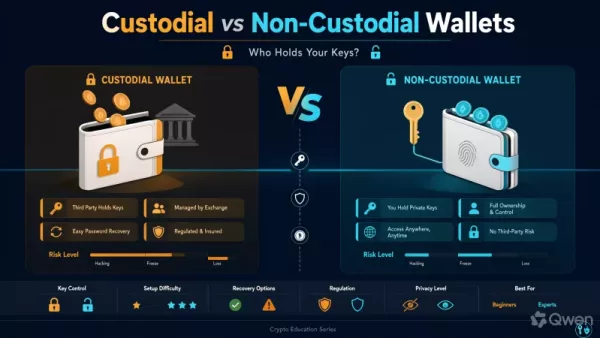
The same distinction applies to crypto wallets. As explained in FX24NEWS’s guide to custodial and non-custodial wallets, control over private keys determines who can authorise transactions. That is an important operational question, but control of a wallet does not automatically establish the legal rights and responsibilities of every party to a brokerage agreement.
Why a Hybrid Contract Structure Makes More Sense
For many brokerage businesses, a hybrid model offers a more realistic balance between automation and legal clarity.
Under this approach, the written broker-client agreement remains the legal foundation. Smart contracts perform selected operations according to rules that are described in the agreement and implemented in code.
A practical structure should address five areas.
- Governing law and dispute resolution
The written agreement should identify the applicable law and the court or arbitration forum. It should also explain whether those provisions cover disputes about automated execution and smart-contract outcomes.
- A plain-language description of automated functions
Clients should be able to understand which operations are automated, what conditions trigger them and which external data sources the system uses.
- Human review of disputed outcomes
A broker should establish a process through which a client can challenge an automated result. The procedure should specify how complaints are submitted, what evidence is reviewed and how the client receives a response.
- Responsibility for technical failures
The agreement should address what happens when code malfunctions, an oracle supplies incorrect data, a network becomes unavailable or a transaction is executed incorrectly. Responsibility should not be left entirely to technical documentation.
- Regulatory review before deployment
The broker should assess each automated function against the rules applicable to its products, legal entity and target markets. The fact that a function operates through a smart contract does not, by itself, establish that the activity is permitted.
These points are not a universal compliance checklist. They are issues that brokers should take to qualified legal and regulatory advisers in every relevant jurisdiction.
What Should Traders Check Before Accepting a Smart Contract Agreement?
Traders should not assume that a blockchain-based agreement provides stronger protection simply because its operations are automated or recorded on-chain.
Before accepting the terms, a client should understand:
- which legal entity provides the brokerage service;
- which written agreement governs the relationship;
- how margin calls, liquidation and fees are calculated;
- which data sources determine automated outcomes;
- whether a disputed transaction can be reviewed by a person;
- how complaints and compensation claims are handled;
- which law and dispute-resolution forum apply.
The key question is what happens when the code produces an outcome the client believes is wrong.
If the agreement does not explain how such a dispute can be raised and assessed, technical automation may create more uncertainty rather than less.
Conclusion: Smart Contracts Should Execute the Agreement, Not Replace It
A smart contract broker agreement can make selected brokerage operations faster and more consistent. It can automate calculations, trigger predefined actions and record transactions. But those capabilities do not eliminate the need for clear contractual terms.
The Law Commission’s 2021 advice confirms that smart legal contracts can be supported by existing law in England and Wales. The CFTC’s 2018 primer highlights operational, technical, cybersecurity and governance risks. The EU’s November 2026 tokenisation initiative shows that common standards for digital financial infrastructure are still evolving.
None of these sources supports the idea that code alone can replace a complete broker-client agreement across jurisdictions.
For brokers, the more defensible approach is to keep written terms as the legal foundation and use smart contracts for clearly defined execution tasks. For traders, the priority is to understand who is responsible when an automated result is disputed.
Code can execute an instruction. A contract must also explain what happens when the parties disagree.
This article is for informational purposes only and does not constitute legal, regulatory or investment advice. The enforceability of a smart contract depends on the applicable law and the facts of the specific arrangement. Brokers should obtain qualified legal advice before deploying automated contractual systems.
By Claire Whitmore