

SpaceX’s $40bn AI Chip Financing Faces Orbital Restrictions
SpaceX’s AI financing meets an unexpected obstacle
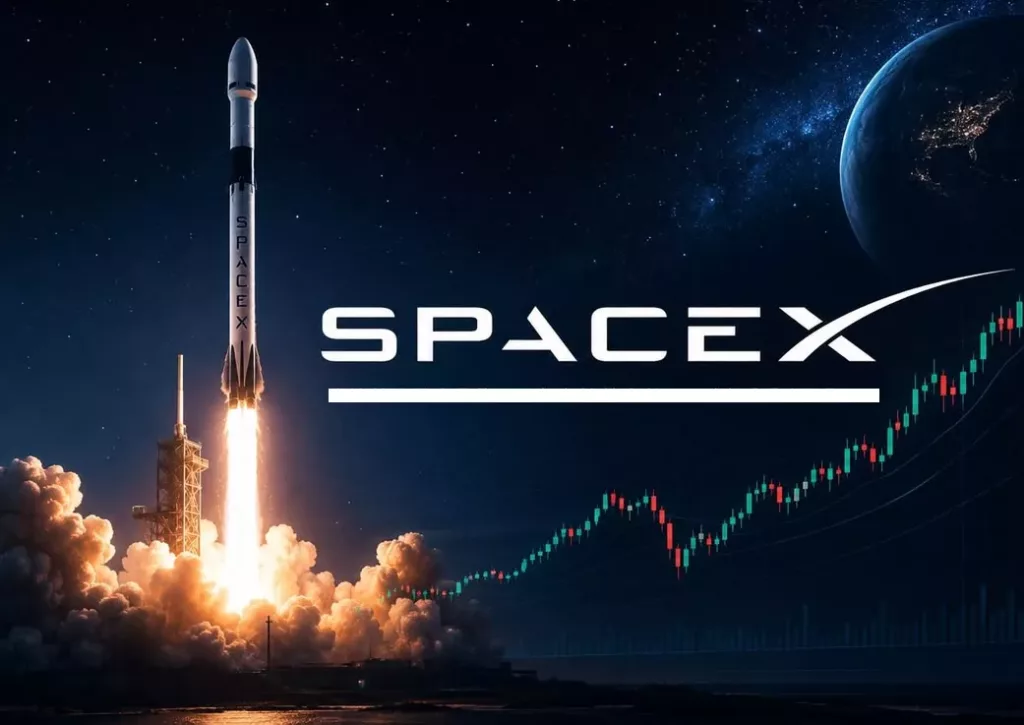
SpaceX’s ambition to expand its artificial intelligence infrastructure has run into an unusual financing problem: lenders want to make sure that the Nvidia chips securing a multibillion-dollar deal do not end up in orbit.
The issue is not whether the company can technically launch computing equipment into space. It is whether creditors could recover their collateral if SpaceX defaulted on its financial obligations.
The financing, known as Project Saturn, is reported to involve a debt package of approximately $43 billion. Lenders reportedly sought contractual safeguards that would prevent SpaceX from moving the chips securing the deal into orbital data centres. If the hardware were deployed in space, repossessing and reselling it could become significantly more complicated.
The precise status of the proposed restriction remains unclear: it has not been established whether the condition was included in the final loan documents. SpaceX, for its part, has said the chips covered by the financing are intended for data centres on Earth.
The dispute highlights a growing tension between the economics of AI infrastructure and the legal structures used to finance it. The more ambitious the deployment strategy, the more difficult it may become to fit the underlying assets into conventional lending arrangements.
What is behind SpaceX’s $40bn chip financing?
On October 26, 2026, SpaceX announced a commitment to enter into an approximately $40 billion master finance lease for GPUs and related equipment. The arrangement is managed by an entity associated with Apollo Global Management and is intended to provide next-generation Nvidia Vera Rubin chips for SpaceX’s terrestrial computing infrastructure.
Apollo is leading the financing, with Goldman Sachs acting as the sole structuring agent. SpaceX also named funds and accounts managed by BlackRock, Goldman Sachs Asset Management and capital accounts advised by KKR among the transaction’s anchor commitments.
The company said the lease was expected to close before the end of 2026, with lease schedules beginning as GPUs and related equipment were delivered in the first half of 2027. These were announced expectations, not confirmation that every stage of the transaction had already been completed.
The subsequent Project Saturn financing has been reported at approximately $43 billion. More than $30 billion of debt was reportedly sold, including a $25 billion investment-grade bond backed by five-year lease payments for the chips.
The bond reportedly carried a yield of around 8.3%, compared with approximately 7.2% on SpaceX’s 2031 corporate debt. The financing received A3 ratings from Moody’s and A-minus from KBRA.
The difference between the $40 billion and $43 billion figures matters. SpaceX’s announcement referred to the approximate value of its master GPU finance lease. The larger figure relates to the reported debt package. They describe connected parts of the financing, not necessarily identical measures of the transaction.
Why lenders are concerned about chips in orbit
In a conventional equipment-financing arrangement, lenders have a relatively clear route to protecting their interests. If a borrower defaults, creditors may be able to repossess the financed equipment, sell it and use the proceeds to reduce outstanding debt.
That logic becomes more complicated when the collateral is placed in space.
Advanced AI accelerators are valuable, specialised assets. Their resale value depends not only on their technical capabilities but also on their condition, accessibility, compatibility and remaining useful life. If the chips are installed in orbital infrastructure, recovering them could require additional technical operations, regulatory permissions and launch-related expenditure.
The practical problem is straightforward: a lender may hold a security interest in an asset without having an easy way to take possession of it.
This creates several potential risks:
- Repossession risk: recovering hardware from an orbital installation could be far more complicated than collecting equipment from a terrestrial data centre.
- Resale uncertainty: specialised equipment may be difficult to sell if it is integrated into a satellite or another space-based system.
- Recovery costs: even if physical recovery is technically possible, the expense could reduce the value available to creditors.
- Legal uncertainty: traditional security and repossession arrangements may not translate neatly into an environment involving spacecraft, orbital assets and multiple jurisdictions.
- Collateral control: lenders need confidence that the borrower cannot materially change the location or use of secured assets without their consent.
These are the kinds of concerns that explain why creditors may seek restrictions on the movement or deployment of financed equipment. The reported request is therefore a question of collateral protection rather than a general objection to SpaceX’s plans for space-based computing.
The difference between terrestrial and orbital AI infrastructure
SpaceX’s public announcement described the $40 billion lease as financing for its terrestrial computing buildout. At the same time, the company has broader ambitions involving orbital AI infrastructure.
The distinction is important because the two deployment models have different operational and financial characteristics.
Terrestrial data centres rely on land, electricity supply, grid connections, cooling systems and physical infrastructure. Their equipment is comparatively accessible, which can make ownership, maintenance, insurance and collateral recovery easier to structure.
Orbital data centres could offer different advantages. SpaceX has argued in its public materials that near-continuous solar power and reusable launch systems could help address some constraints facing computing infrastructure on Earth. However, these potential benefits do not remove the engineering and economic challenges of operating advanced computing hardware in space.
The US Government Accountability Office identified heat management and the growing complexity of managing large numbers of satellites as important challenges for space-based data centres in its April 2026 assessment. Computing equipment generates heat, and removing it in a vacuum requires specialised thermal systems. Hardware must also withstand launch conditions, radiation and the operating environment in orbit.
For lenders, these technical questions feed directly into financial risk. An asset that is difficult to maintain, access or recover may be less straightforward to use as collateral.
What the financing structure tells investors
Project Saturn also illustrates how large technology companies are using specialised financing structures to fund the expansion of AI infrastructure.
SpaceX’s announced arrangement is a master finance lease rather than simply a conventional unsecured corporate loan. In a finance lease, the use of equipment and the associated payment obligations are organised through contractual arrangements between the lessee and the financing structure.
The reported debt package also uses a special-purpose vehicle, a structure designed to keep the borrowing outside SpaceX’s own balance sheet. Such arrangements can help distribute financing across different investors and capital markets.
However, moving debt into a separate vehicle does not make the underlying risks disappear. Investors still need to understand the quality of the collateral, the reliability of the lease payments, the legal rights available after a default and the value of the assets supporting the transaction.
The reported bond yield of approximately 8.3% is also worth watching. It is higher than the roughly 7.2% yield cited for SpaceX’s 2031 corporate debt. The comparison does not, by itself, prove that the market is pricing in a specific probability of default. The securities may differ in structure, maturity, collateral and liquidity. Nevertheless, the spread illustrates why investors should examine the details of an asset-backed financing rather than relying only on the borrower’s name or credit profile.
For a broader explanation of how financial-market data supports pricing and execution, see FX24’s analysis, Price Feed – The Digital Heart of a Forex Broker.
Could the dispute affect the future of orbital data centres?
The reported lender concerns do not establish that SpaceX’s orbital data-centre ambitions have been cancelled or that the company is prohibited from deploying computing hardware in space.
The immediate question is narrower: what restrictions, if any, apply to the specific chips financed under Project Saturn?
If the final agreements contain a restriction on orbital deployment, SpaceX may need to keep the financed equipment within the permitted terrestrial infrastructure or negotiate a change to the financing terms before using it elsewhere.
If the restriction was not included, lenders may still seek other protections. These could involve tighter controls over asset transfers, insurance requirements, reporting obligations or additional collateral arrangements. These are possible approaches in equipment finance, not confirmed terms of the SpaceX transaction.
The broader implications extend beyond one company. As AI infrastructure becomes more capital-intensive, financing structures are likely to play an increasingly important role in determining how quickly projects can expand. The ability to secure funding will depend not only on expected demand for computing capacity but also on whether investors can identify, value and protect the assets supporting their exposure.
Space-based computing adds another layer of uncertainty. It introduces technical and operational risks that conventional data-centre financing was not designed to address.
What investors and traders should watch
The SpaceX financing dispute offers several indicators for investors monitoring the AI infrastructure market.
- Final loan documentation
The most important unanswered question is whether the proposed restriction on orbital deployment appears in the executed financing documents. Until the contractual position is clear, it would be premature to describe the restriction as a confirmed ban.
- Collateral and recovery provisions
Investors should examine how the financing defines the secured assets, what happens after a default and whether creditors can enforce their rights if equipment is moved, modified or integrated into another system.
- Financing costs
The reported yield on the Project Saturn bonds provides a reference point for assessing the cost of financing specialised AI hardware. Future transactions may show whether investors demand higher compensation for complex collateral structures.
- AI infrastructure spending
The scale of financing required for GPUs, data centres, electricity and supporting infrastructure remains a key consideration for the technology sector. Companies may have strong demand forecasts, but lenders and bond investors still need evidence that future cash flows can support the cost of capital.
- The commercial feasibility of orbital computing
Technical demonstrations and ambitious corporate plans should not be confused with proven commercial economics. Launch costs, hardware lifetime, thermal management, maintenance and replacement cycles will all affect the viability of large-scale orbital infrastructure.
Conclusion: the limits of financing ambition
SpaceX’s $40 billion GPU financing shows how the AI infrastructure race is creating new challenges for lenders and investors. The proposed restriction on sending financed Nvidia chips into orbit is not simply a disagreement over Elon Musk’s long-term plans. It reflects a basic requirement of secured lending: creditors need to know that the assets backing their exposure will remain accessible and recoverable.
For SpaceX, the challenge is to balance its infrastructure strategy with the contractual conditions attached to a major financing arrangement. For lenders, the priority is to protect collateral in a transaction involving equipment that could become difficult to recover once deployed in space.
The outcome will matter beyond this deal. As companies explore increasingly ambitious ways to build AI computing capacity, the structure of financing may become just as important as the technology itself.